Rotted Roof Decking: What Happens When the Wood Under Your Shingles Fails?
Roof Decking Guide
Rotted Roof Decking: What Happens When the Wood Under Your Shingles Fails?
Rotted roof decking can stay hidden beneath shingles and underlayment until a repair or full roof replacement exposes the wood. Because the decking supports the roofing materials and provides the surface that holds many of the roof's fasteners, damaged sections need to be evaluated before new shingles cover them again.
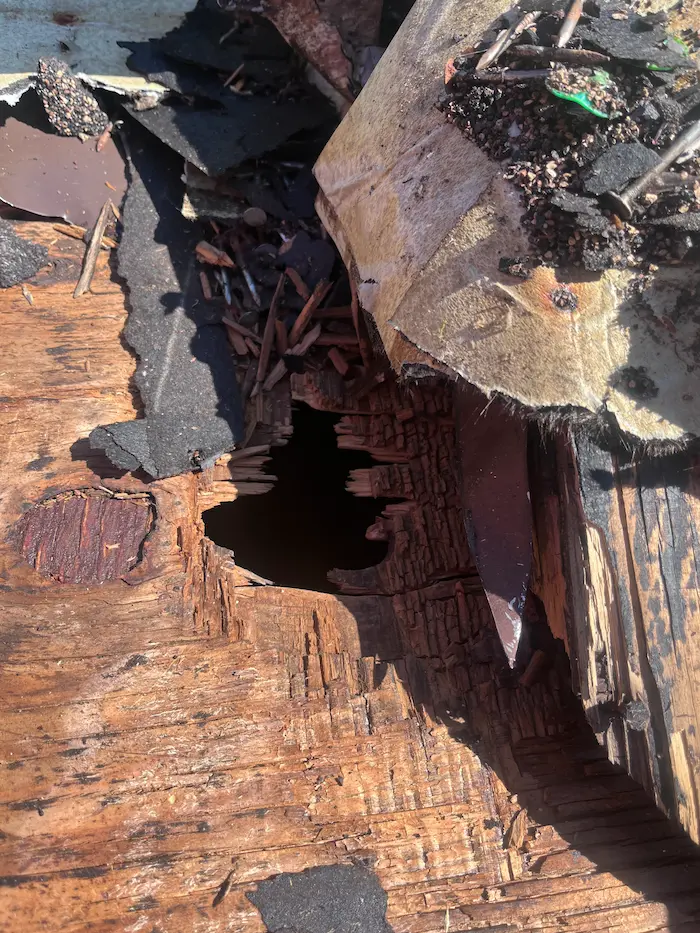
Rotted or badly deteriorated roof decking should not simply be covered with new shingles. The deck needs to provide a sound, supported surface with adequate nail-holding ability. If sections have become soft, decayed, delaminated, broken, or otherwise unsuitable for the roofing system, those areas should be repaired or replaced before the new roof goes on.
In This Article
Under the Shingles
What Is Roof Decking?
Roof decking, also called roof sheathing, is the wood surface attached to the roof framing beneath the roofing system.
On many homes, that surface consists of plywood or oriented strand board, commonly called OSB. Older homes may have individual wood boards or plank decking instead.
Underlayment, ice and water protection, shingles, and many other roofing components sit above this wood.
The shingles are the part you see from outside. The decking is the base that gives the roofing system a solid surface underneath.
Why Does the Deck Matter?
Owens Corning's current Duration installation instructions call for a properly built and supported wood roof deck with adequate nail-holding capacity and a smooth surface.
That requirement makes sense. The roofing system needs a suitable surface before the installer can properly fasten new shingles over it.
The Main Cause
What Causes Roof Decking to Rot?
Moisture is the main ingredient behind wood decay.
A short period of wetting does not automatically mean a roof deck has rotted. Problems become more serious when wood remains wet or repeatedly gets wet over time.
GAF describes roof-deck rot as fungal decay that develops when wood has the moisture conditions needed for the fungi to grow.
Roof Leaks
Water that gets through shingles, flashing, or another roof detail can repeatedly wet the same area of decking.
A small leak that goes unnoticed for years can sometimes damage more wood than a larger leak that gets repaired immediately.
Failed Flashing
Chimneys, walls, skylights, valleys, and other transitions depend on correctly installed flashing to direct water away from vulnerable areas.
When those details fail, moisture can reach the wood beneath the roofing. Our guide to roof flashing around chimneys and skylights explains why these transitions deserve extra attention.
Ice-Dam Water Backup
Winter water can also enter beneath roofing materials when an ice dam prevents normal drainage and water backs up along the roof edge.
Learn more about the causes and prevention of ice dams on Northeast Pennsylvania roofs .
Attic Moisture
Moisture does not always come from outside.
Warm, moisture-laden indoor air that reaches a cold attic can contribute to condensation on the underside of roof decking. Long-term moisture problems can eventually create conditions that allow wood decay to develop.
When damaged decking is found, replacing the wood is only part of the job. The source of the moisture also needs to be understood.
An Important Distinction
Does Dark or Stained Roof Decking Automatically Mean It Is Rotten?
No.
Wood can change color for several reasons, including old water staining, surface weathering, construction exposure, and previous moisture.
Dark wood deserves attention, but color alone does not tell us whether a sheet of plywood or OSB can still perform properly.
Moisture Can Change the Surface Without Destroying the Panel
APA – The Engineered Wood Association notes that plywood and OSB exposed to moisture can develop swelling, roughness, lifting, or flaking at the surface.
APA also reports that these visible changes do not automatically mean the panel lost structural capacity once it has dried back to normal in-service moisture conditions.
What Matters More Than Color?
We do not decide whether roof decking needs replacement simply by looking for dark wood. We look at what condition the wood is actually in.
Possible Warning Signs
What Are Signs of Damaged Roof Decking?
Much of the roof deck stays concealed, but some conditions can provide clues before a full tear-off.
They help identify areas that deserve closer evaluation. The full condition often becomes much easier to see once the old roofing materials come off.
Why Solid Wood Matters
Why Can't New Shingles Just Be Nailed Over Soft or Rotted Wood?
Roofing nails need something solid to hold them.
Owens Corning's current Duration instructions specifically call for a wood roof deck with adequate nail-holding capacity.
GAF likewise notes that damaged decking may not securely hold shingle nails.
The Fastener Depends on the Material Beneath It
A roofing nail driven into sound decking behaves differently from one driven into badly softened or deteriorated wood.
Covering failed decking with underlayment does not restore the strength of the wood underneath.
A new shingle is only as securely fastened as the material holding the nail beneath it.
This is why correcting unsuitable decking before installing the new roof matters to the entire roofing system, not just the appearance of the wood.
Localized vs. Widespread
Does Finding Rotted Decking Mean the Whole Roof Needs New Plywood?
No.
Decking replacement should match the condition that is actually found and the requirements of the roof.
Localized Damage
A long-term leak around one pipe, chimney, roof edge, or valley may damage a limited area while the surrounding decking remains sound.
In that situation, replacing the affected section may be appropriate.
Widespread Damage
A roof with extensive deterioration, widespread moisture damage, severely inadequate sheathing, or another broad decking problem can require much more replacement.
The condition of the wood and the roofing requirements determine the scope, not simply the age of the house.
Finding one bad sheet does not automatically mean every sheet is bad. Finding one good sheet does not prove the rest of the roof is good either.
Older Northeast PA Homes
What if the Roof Has Old Wood Boards Instead of Plywood or OSB?
Many older homes were built with individual wood boards across the roof framing rather than modern sheet decking.
Board decking does not automatically need to be removed simply because it is old.
The Existing Surface Still Needs to Be Suitable
A contractor needs to look at the condition of the boards, spacing between them, damaged areas, fastening surface, and the requirements for the roofing product being installed.
Broken boards, very large openings, extensive deterioration, or a surface that cannot properly support the roofing system can require additional work.
In other situations, existing boards may remain part of a suitable roof assembly.
We do not assume that every old board deck must be replaced, and we do not assume every old board deck is automatically ready for new shingles. The existing roof has to be evaluated against the project requirements.
During Roof Replacement
What Happens When Damaged Decking Is Found During Tear-Off?
Once the old roofing comes off, the crew can inspect exposed decking before covering it with the new system.
First, Identify the Damaged Area
The roofer determines where the unsuitable wood begins and ends rather than replacing wood based only on an old stain.
Next, Remove the Unsuitable Material
Damaged sections can then be removed so replacement decking can attach properly to the roof framing.
Then, Install a Suitable Replacement
The replacement material, thickness, fastening, support, and installation need to meet the requirements that apply to that roofing project.
Finally, Continue the Roofing System
Once the deck provides a suitable surface, the crew can continue with the required ice and water protection, underlayment, shingles, and other roofing components.
Depending on the municipality and extent of the work, decking replacement can also affect the local inspection or permit process. Our guide to roof permits and inspections in Lackawanna County explains why those procedures can differ between nearby towns.
Roofing Estimates
Why Can't a Roofer Always Tell You the Exact Decking Cost Before Tear-Off?
Because most of the upper surface of the deck is hidden beneath the existing roofing system.
A contractor can use visible conditions, attic access, leak history, and experience to identify likely problem areas, but none of those methods allow someone to see through every shingle.
A Clear Unit Price Helps Handle the Unknown
One practical approach is for the roofing estimate to explain how additional decking will be charged if the crew discovers damaged wood after tear-off.
That lets the homeowner know the cost per sheet or other applicable unit before the work begins without pretending the exact quantity is already known.
GAF's current decking guidance also notes that contractors cannot always predict the need for repair or replacement ahead of time because the deck is not always visible from the exterior.
We would rather explain the unknown decking cost clearly before the job than pretend we can see wood that is still covered by the old roof.
Buying a Home
Can a Home Inspection Find All Rotted Roof Decking?
Not always.
An inspector may see stains, deterioration from the attic, irregular roof areas, or other warning signs. Those clues can be very useful.
However, some decking remains hidden between the finished roof and the interior of the home.
That is why buyers should understand the difference between evidence of a problem and knowing the exact amount of damaged wood.
Our guide to buying a house with an older roof in Northeast Pennsylvania explains how roofing concerns can fit into the larger home-buying process.
Preventing Future Damage
How Can Homeowners Help Protect Roof Decking?
Homeowners cannot directly maintain decking the way they clean a gutter or replace a damaged shingle because the wood sits underneath the roofing system.
The best protection comes from controlling the moisture that could reach it.
If water is actively entering the house, our guide to what to do during an emergency roof leak explains the safest first steps.
Finding the Source
Damaged Decking Tells You Water Was There — Not Always Where It Entered
Water does not always travel straight down from the point where it enters the roofing system.
It can follow framing, the underside of the roof deck, fasteners, or other surfaces before it becomes visible inside the house.
That means damaged decking near an interior stain does not automatically identify the exact exterior leak source.
A proper repair needs to address both the damaged wood and the path that allowed moisture to reach it.
Our upcoming guide to roof inspections and hidden leaks explains how visual inspection, attic evaluation, moisture information, and other tools can help narrow down difficult leak sources.
Replacing rotted wood without correcting the leak that caused it only fixes half of the problem.
FAQs
Questions About Rotted Roof Decking
What is roof decking?
Roof decking, also called sheathing, is the wood surface attached to the roof framing beneath the roofing materials. Common residential decking includes plywood, OSB, and older wood-board systems.
What causes roof decking to rot?
Wood decay develops when moisture remains present long enough to support fungal growth. Roof leaks, failed flashing, repeated water intrusion, condensation, and other long-term moisture conditions can contribute to decking damage.
Does dark plywood mean it needs to be replaced?
No. Dark staining can show that moisture reached the wood at some point, but color alone does not determine whether a panel needs replacement. Softness, decay, delamination, damage, support, and nail-holding ability matter more than appearance alone.
Can you install new shingles over rotted decking?
Badly deteriorated decking should not simply be covered with a new roofing system. Shingle manufacturers require a suitable roof deck, and the wood needs to provide adequate support and nail-holding capacity.
How do roofers know if decking is bad?
Roofers can sometimes identify warning signs through attic access, leak history, visible deterioration, soft areas, or other conditions. The clearest view often comes during tear-off when the old shingles and underlayment no longer cover the upper surface of the deck.
Does finding one bad sheet mean all roof decking needs replacement?
No. Localized damage can sometimes be corrected by replacing only the affected sections. Widespread deterioration or an unsuitable overall deck can require a larger scope. The actual condition determines the work.
Does every old roof need new plywood?
No. Roof age alone does not determine whether decking needs replacement. The contractor should evaluate the existing wood, support, spacing, condition, fastening surface, and the requirements of the roofing system.
Can a roofer know exactly how many sheets of plywood I need before tear-off?
Not always. Much of the roof deck remains hidden beneath the existing shingles and underlayment. A contractor can identify suspected problem areas, but the exact amount of damaged decking may not become clear until the old roofing materials are removed.
Can a home inspector find hidden roof decking damage?
A home inspector may find useful warning signs such as attic stains, visible deterioration, leaks, or irregular roof areas. Some decking remains concealed, however, so an inspection may not reveal the full amount of damage beneath the roofing materials.
Can a roof leak damage decking without leaking through the ceiling?
Yes. Water can reach the roof deck and travel along framing or other surfaces before becoming visible inside the living space. Some moisture damage can therefore develop before a homeowner sees a ceiling stain.
Recent Articles
Roofing Advice & Guides
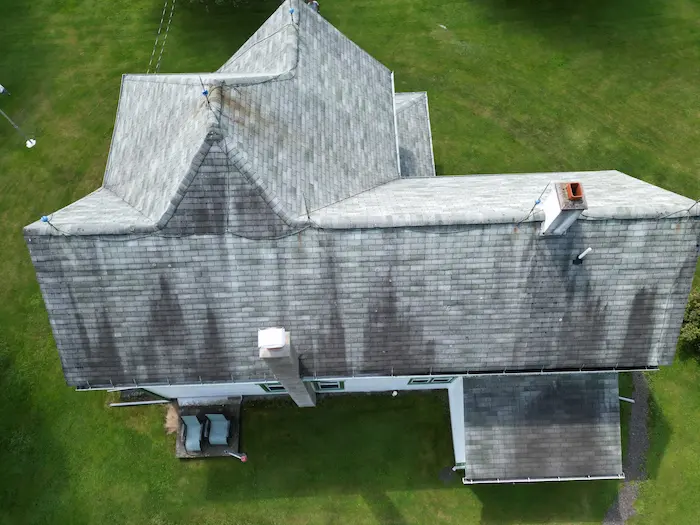
Black Streaks on Roof Shingles: What Causes Them?
Learn what causes black streaks on asphalt shingles, how they should be cleaned safely, and how algae-resistant shingles can help.
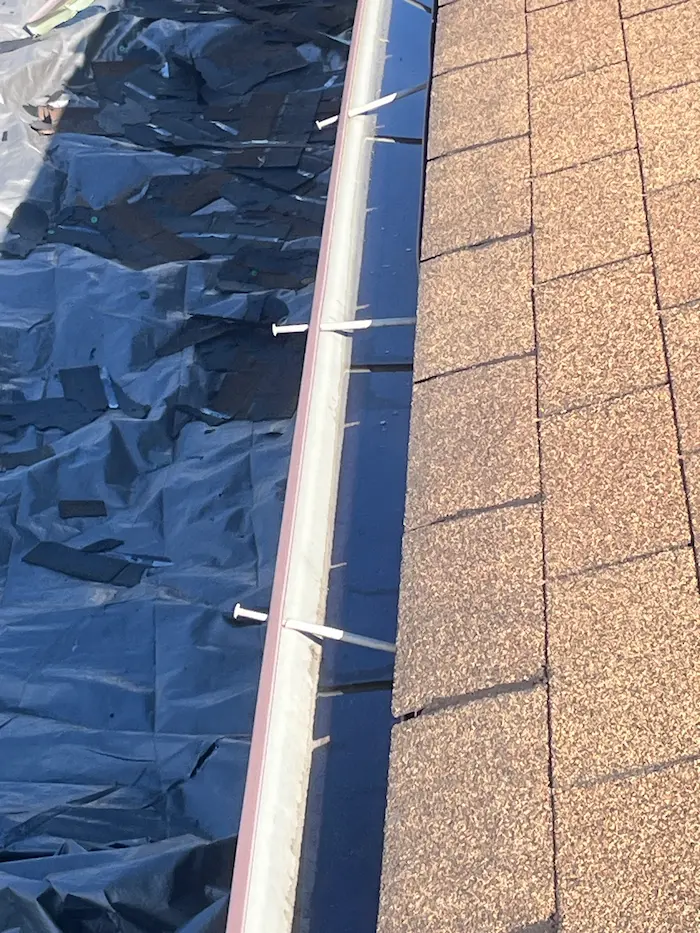
How Clogged Gutters Can Cause Hidden Water Damage
See how poor gutter drainage can affect fascia, soffits, siding, landscaping, and the area around your home's foundation.
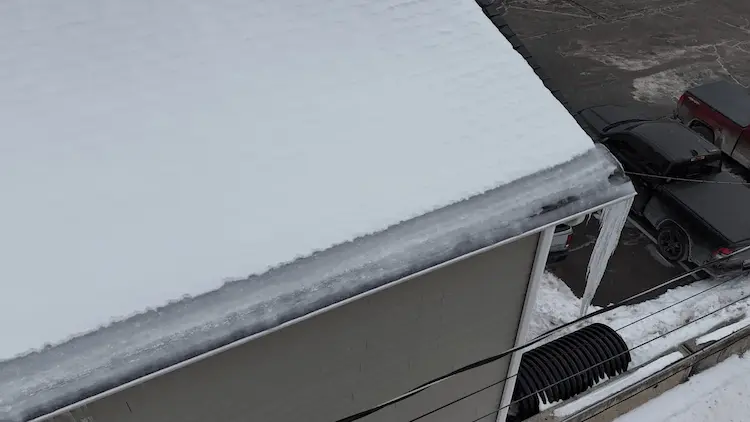
How to Prevent Ice Dams on Your Roof in Northeast Pennsylvania
Learn why ice dams form, how insulation and ventilation affect them, and what homeowners should do when ice builds along the roof edge.
Ready to Talk About Your Roof?
Contact Zenobi Roofing Inc. for roof replacement, roof repair, storm damage inspections, and gutter services throughout Archbald, Scranton, Clarks Summit, the Mid Valley, and surrounding NEPA communities.