Black Streaks on Roof Shingles: What Causes Them and How to Clean Them Safely
Roof Maintenance
Black Streaks on Roof Shingles: What Causes Them and How to Clean Them Safely
Black streaks on roof shingles are common on homes throughout Northeast Pennsylvania. They may look like dirt, mold, or signs that the shingles are failing, but the dark discoloration is often caused by algae growing across the roof surface.
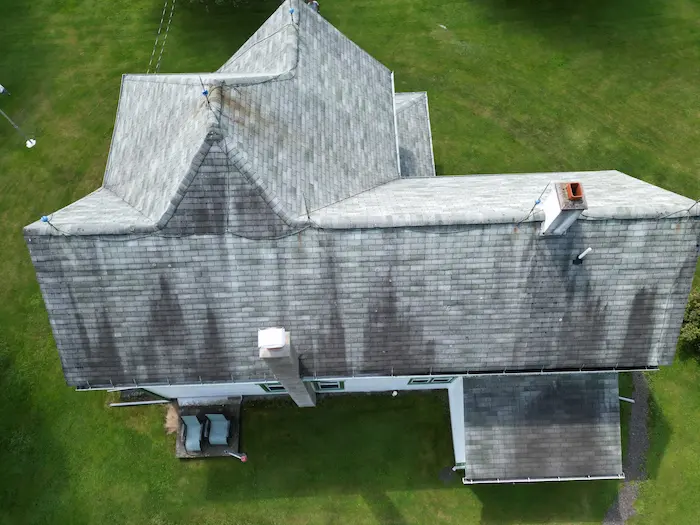
Black streaks on asphalt shingles are often algae discoloration rather than dirt or mold. The staining is mainly an appearance issue, but cleaning the roof incorrectly can damage the shingles. Avoid pressure washing or scrubbing and follow the cleaning instructions provided by the shingle manufacturer.
In This Article
The Cause
What Causes Black Streaks on Roof Shingles?
Dark streaks running down an asphalt shingle roof are often caused by algae. One of the species commonly associated with this discoloration is Gloeocapsa magma.
The algae is naturally occurring and can be carried through the air before settling on roofing and other outdoor surfaces.
As the growth becomes more noticeable, the roof may develop brown or black discoloration. On some roofs it appears as long streaks running toward the eaves. On others, larger sections of the roof may gradually become darker.
What looks like a dirty roof from the ground may actually be biological growth developing across the surface of the shingles.
The staining can sometimes be mistaken for mold, fungus, soot, dirt, moss, or debris. Looking at the pattern and condition of the shingles can help determine what is actually present.
Roof Conditions
Why Do Some Roofs Develop More Black Streaking?
Algae discoloration can occur in many parts of the country, including the eastern United States. Moist conditions can make some roofs more favorable for visible growth.
Two sections of the same roof can even look different. One slope may develop noticeable streaking while another remains relatively clean.
This is one reason homeowners sometimes notice one side of a roof becoming darker years before the opposite slope shows the same appearance.
Roof Condition
Does Algae Damage Asphalt Roof Shingles?
Black algae staining can make a roof look considerably older than it actually is.
Owens Corning describes algae growth and the resulting black streaks as an appearance concern and states that algae growth does not affect the performance of the shingles.
That distinction is useful because homeowners sometimes assume dark streaks automatically mean the roof needs replacement.
A stained roof and a worn-out roof are not necessarily the same thing.
The shingles still need to be evaluated based on their actual condition. Cracking, missing shingles, exposed areas, damaged flashing, leaks, or other signs of deterioration are separate concerns from algae discoloration.
If the roof has other visible issues in addition to the staining, an inspection can help separate a cosmetic condition from an actual roofing problem.
Our planned guide to roof inspections and hidden leaks will explain more about how different roof conditions are evaluated.
Cleaning
How Should Black Streaks Be Cleaned From Roof Shingles?
Asphalt shingles should be cleaned carefully. The goal is to treat the discoloration without removing protective granules or damaging the roof surface.
The Asphalt Roofing Manufacturers Association recommends consulting the shingle manufacturer because cleaning solution instructions can vary between roofing products and manufacturers.
Manufacturer-approved cleaning may involve a diluted sodium hypochlorite solution and water, followed by a gentle rinse. The exact mixture and procedure should follow the instructions for the specific shingles on the roof.
This is why we would not recommend using a random roof-cleaning recipe found online without first checking the roofing manufacturer's instructions.
Cleaning solutions and rinse water can make shingles extremely slippery. Working on a roof already carries a fall risk, which is one reason professional cleaning is often the better approach.
What to Avoid
Why You Should Not Pressure Wash Asphalt Shingles
A pressure washer can make stained shingles look cleaner quickly, but that does not make it an appropriate cleaning method.
Asphalt shingles have protective granules embedded in their surface. Aggressive cleaning can loosen and remove those granules.
ARMA specifically advises against using power washers on asphalt roofing. It also advises against scrubbing the shingles with a brush or broom.
Cleaning the roof should never create more damage than the staining you were trying to remove.
After Cleaning
Can Black Streaks Come Back After the Roof Is Cleaned?
Yes. Cleaning an existing roof can improve its appearance, but it does not necessarily prevent algae from returning.
ARMA notes that cleaning may only provide temporary improvement and that discoloration can recur.
How quickly that happens depends on the roofing material and the conditions around the home.
This is also why repeatedly cleaning the roof should not become an excuse to use increasingly aggressive methods.
If a roof is otherwise in good condition, recurring discoloration may remain primarily an appearance issue. If the roof is already nearing replacement age, it may make more sense to consider algae-resistant shingles when the roofing system is eventually replaced.
A roof tune-up and seasonal inspection can also help identify whether the staining is the only visible concern or whether other roofing details need attention.
New Roof Options
How Algae-Resistant Shingles Help
Modern asphalt shingles are available with features designed to inhibit algae growth and reduce the black streaking that can develop over time.
These shingles are algae resistant rather than algae proof. The purpose is to help control algae growth and discoloration for an extended period.
Owens Corning StreakGuard® Protection
Owens Corning uses StreakGuard® Algae Resistance Protection on qualifying shingle products. The system uses specialized copper-lined granules within the shingles to help inhibit blue-green algae growth.
Owens Corning currently lists its Duration® Series among the shingle lines eligible for a 25-year Algae Resistance Limited Warranty when the applicable product and installation requirements are met.
The manufacturer's current requirements include using an approved Owens Corning hip and ridge shingle product for the applicable algae-resistance warranty coverage.
A warranty should never be judged only by the number of years printed next to it. Product selection, installation requirements, qualifying accessories, exclusions, and the actual written warranty determine the coverage.
We will cover those differences separately in our guide to workmanship warranties and manufacturer roof warranties .
Appearance Matters When Choosing a New Roof
Algae resistance can be especially worth considering when roof appearance is important to the homeowner.
The roof covers a large portion of the visible exterior of many homes, so shingle color and long-term appearance can have a noticeable effect on curb appeal.
Our upcoming guide to choosing the best shingle color for a Northeast Pennsylvania home will look at how roofing colors work with siding, brick, stone, trim, and different styles of homes.
You can also learn more about the roofing systems we install on our roof replacement page .
Other Conditions
Black or Green Roof Staining Is Not Always Algae
Not every dark or green area on a roof should automatically be diagnosed as algae.
Moss, tree debris, dirt, soot, staining from nearby materials, and other conditions can create discoloration that looks similar from the ground.
Moss in particular can appear more localized and has a different physical growth pattern than the flat streaking commonly associated with algae.
A roof can also have more than one condition at the same time. Algae staining does not rule out aging shingles, damaged flashing, missing shingles, or previous leaks.
If the roof looks different than it used to, identifying what you are actually seeing should come before deciding how to clean or repair it.
Replacement or Cleaning
Do Black Streaks Mean the Roof Needs to Be Replaced?
Usually, black streaking by itself is not enough reason to replace an asphalt shingle roof.
Roof replacement should be based on the condition of the roofing system rather than appearance alone.
A roof that still has sound shingles, proper flashing, and no active leaks may simply have an algae-staining issue.
The situation changes when the staining is accompanied by other signs of deterioration.
If those conditions are present, the roof should be evaluated based on the actual problem rather than trying to improve its appearance with cleaning.
FAQs
Questions About Black Streaks on Roof Shingles
What causes black streaks on asphalt shingles?
Black or brown streaks on asphalt shingles are often caused by algae discoloration. One species commonly associated with the staining is Gloeocapsa magma. The algae is naturally occurring and can be carried through the air before growing on roofing surfaces.
Are black roof streaks mold?
Not necessarily. Algae discoloration can be mistaken for mold, fungus, dirt, soot, moss, or other material. The appearance and pattern of the staining can help determine what is actually present.
Can I pressure wash black streaks off my roof?
No. Pressure washing asphalt shingles is not recommended because high-pressure water can damage the roofing surface and remove protective granules. Aggressive scrubbing with brushes or brooms should also be avoided.
Do black streaks mean my shingles are bad?
Not necessarily. Algae staining can make a roof look older without meaning the shingles have failed. The roof should be evaluated separately for physical wear, missing shingles, flashing problems, leaks, and other signs of deterioration.
Will cleaning permanently stop algae from coming back?
No. Cleaning can improve the appearance of an existing roof, but the staining can return. Algae-resistant shingles are designed to help inhibit future growth for an extended period.
Are algae-resistant shingles completely algae proof?
No. Algae-resistant shingles are designed to help control algae growth and discoloration. They should not be interpreted as a guarantee that algae can never develop under any condition.
Do Owens Corning Duration shingles have algae protection?
Owens Corning currently offers StreakGuard Algae Resistance Protection on Duration Series shingles. Current warranty terms include a 25-year Algae Resistance Limited Warranty for qualifying installations that meet the manufacturer's requirements.
Recent Articles
Roofing Advice & Guides
Black Streaks on Roof Shingles: What Causes Them?
Learn what causes black streaks on asphalt shingles, how they should be cleaned safely, and how algae-resistant shingles can help.
How Clogged Gutters Can Cause Hidden Water Damage
See how poor gutter drainage can affect fascia, soffits, siding, landscaping, and the area around your home's foundation.
How to Prevent Ice Dams on Your Roof in Northeast Pennsylvania
Learn why ice dams form, how insulation and ventilation affect them, and what homeowners should do when ice builds along the roof edge.
Ready to Talk About Your Roof?
Contact Zenobi Roofing Inc. for roof replacement, roof repair, storm damage inspections, and gutter services throughout Archbald, Scranton, Clarks Summit, the Mid Valley, and surrounding NEPA communities.