How Roof Inspections Find Hidden Leaks — and What the Tools Can’t See
Roof Leak Diagnosis
How Roof Inspections Find Hidden Leaks — and What the Tools Can't See
A roof inspection for hidden leaks can involve much more than looking at the shingle directly above a ceiling stain. Water can enter in one place, travel through the roof assembly, and become visible somewhere else. Visual inspection, attic access, moisture readings, thermal imaging, drones, and other methods can help narrow the search, but no single tool can see through every layer of a roof.
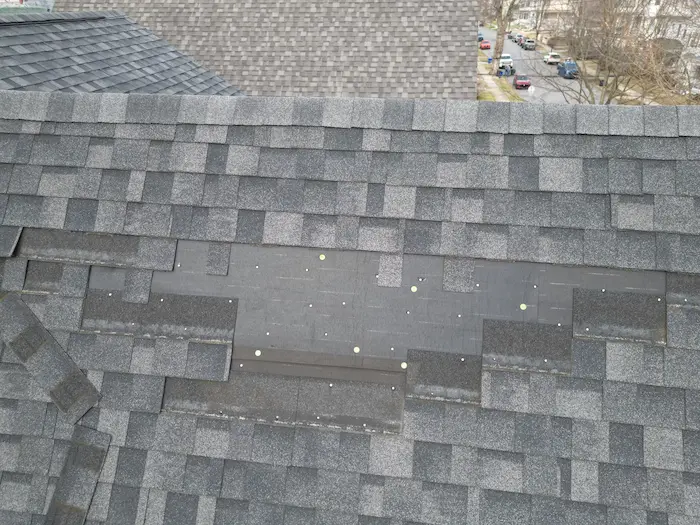
Modern roof-inspection tools can help narrow down a hidden leak without immediately removing shingles, but they cannot guarantee that every leak will be found without opening the roof. A good investigation combines the visible roof condition, interior water location, attic evidence, flashing details, roof design, moisture information, and other clues. If the evidence still does not confirm the failure, carefully opening the suspected area may be necessary.
In This Article
Following the Water
Why Are Some Roof Leaks So Difficult to Find?
The place where water appears inside the house is not always the place where it entered the roofing system.
Water can move along roof decking, rafters, framing, fasteners, insulation, pipes, or other building materials before gravity finally brings it through the ceiling.
Owens Corning notes that a ceiling water spot may make it obvious that a leak exists while the actual cause remains much harder to pinpoint.
Some Leaks Only Happen Under Certain Conditions
A roof may stay dry during ordinary rain and leak during wind-driven rain. Another leak may appear only when snow melts or ice causes water to back up.
The direction of the wind, amount of rain, snow conditions, and duration of the weather event can all provide useful clues.
The ceiling stain tells you where the water became visible. The inspection has to determine how it got there.
If water is actively entering the house, see our guide to what to do during an emergency roof leak .
Before the Technology
Where Should a Roof Inspection for Hidden Leaks Start?
A difficult roof leak does not automatically require a thermal camera, drone, or specialized meter.
The investigation should start by understanding the building and the circumstances surrounding the leak.
Technology works best when it supports a logical inspection. It does not replace understanding how the roof is supposed to shed water.
Exterior Evidence
What Can a Visual Roof Inspection Find?
Many roof leaks still come down to conditions that can be seen once the correct area receives a close inspection.
Shingles and Roof Surface
Missing, damaged, lifted, cracked, or improperly installed roofing materials may point toward a possible entry path.
Flashing and Transitions
Chimneys, walls, skylights, and other transitions depend on properly installed flashing to direct water onto the roof surface.
Our guide to roof flashing around chimneys and skylights explains why these details deserve close attention during leak diagnosis.
Previous Repairs
Heavy sealant, patchwork shingles, coatings, or repeated repairs can show where someone previously tried to stop water.
Those repairs provide useful history, but the most obvious patch is not automatically the current leak source.
Penetrations and Roof Edges
Plumbing vents, exhaust vents, roof-to-wall areas, valleys, drip edges, and other components can all become part of the investigation depending on where the interior water appears.
Looking From Below
How Can the Attic Help Find a Hidden Roof Leak?
When the attic is safely accessible, looking at the underside of the roof can add information that is impossible to see from the exterior.
Water staining, wet insulation, visible moisture, deteriorated decking, nail staining, or a recognizable water path can help narrow down the exterior area that needs attention.
Old Stains Need Context
A dark mark on roof decking may show where water reached the wood in the past. It does not automatically prove that the area is currently wet or that the roof still leaks there.
Comparing the stain with current moisture conditions, recent weather, and exterior roof details gives the observation more meaning.
If the wood itself has deteriorated, our guide to rotted roof decking and damaged sheathing explains how moisture can affect the roofing substrate.
The attic can reveal where water traveled below the roofing system, but it may still take exterior investigation to determine exactly where the water entered.
Thermal Imaging
Can an Infrared Camera See a Hidden Roof Leak?
Not directly.
A thermal camera detects differences in surface temperature. It does not literally see water through shingles, ceilings, or walls.
FLIR explains that thermal imaging can reveal temperature patterns that may indicate moisture because wet materials can heat and cool differently from surrounding dry materials.
A Thermal Pattern Is a Clue
If part of a ceiling or wall displays an unusual thermal pattern, the area may deserve closer investigation.
Moisture is only one possible explanation.
Insulation differences, air leakage, heating and cooling systems, sunlight, material changes, and other building conditions can also create temperature differences.
Confirmation Matters
A suspicious thermal image becomes much more useful when it lines up with another piece of evidence, such as a moisture reading, visible stain, known roof detail, attic observation, or recent leak history.
Thermal imaging can help answer, “Where should we investigate more closely?” It does not automatically answer, “Which roofing component failed?”
Moisture Testing
What Can a Moisture Meter Tell You About a Roof Leak?
Moisture meters can help compare moisture conditions in accessible building materials.
Depending on the meter and material, an inspector may use pin or pinless measurements to investigate wood, drywall, roofing assemblies, or other surfaces.
Tramex produces instruments specifically designed to evaluate moisture conditions in roofing, walls, wood, drywall, and related building materials.
Higher Moisture Does Not Identify the Exterior Hole
A meter may help show that one part of the ceiling, wall, or deck contains more moisture than a comparison area.
That information can help map the affected area.
It still does not automatically identify which shingle, fastener, flashing detail, or penetration allowed the water into the roof.
The Material Matters
Different meters use different measurement methods and scales. Readings need to be interpreted according to the material and instrument rather than treating every number as interchangeable.
A moisture meter can help confirm that moisture is present. Roofing knowledge is still needed to work backward toward the source.
A View From Above
How Can a Drone Help With a Roof Inspection?
A drone can provide high-resolution views of roof areas that may be difficult to observe clearly from the ground.
This can be useful on tall homes, steep roofs, complex rooflines, chimneys, valleys, ridges, or areas where an overview of the roof helps with the investigation.
What a Drone Can Show
What a Drone Cannot Show
A standard drone camera cannot see through shingles, underlayment, flashing, siding, or roof decking.
It can photograph the exterior surface from another angle. It does not turn the roof into an X-ray.
Commercial drone inspections are subject to FAA rules. The person operating the aircraft needs to follow the requirements that apply to the flight, airspace, aircraft, and operation.
Know the Limits
What Can't Modern Roof-Inspection Tools Tell You?
Diagnostic tools can provide more evidence, but none of them makes the roofing assembly transparent.
A tool becomes useful when its findings fit the physical evidence from the roof and the house.
Reproducing the Leak
Can Controlled Water Testing Help Find a Difficult Roof Leak?
In some situations, controlled testing can help isolate a difficult leak after the likely area has been narrowed down.
The idea is to test one area or component at a time rather than soaking the entire roof and making the results impossible to interpret.
The Test Needs a Plan
The inspector should understand the suspected water path before adding more water to a building that already has a leak.
Someone may also need to observe the interior or attic while the exterior area is tested.
Controlled testing is not appropriate for every situation, especially when additional water could create unnecessary damage.
The goal is to confirm a theory about the leak, not simply put more water on the roof and hope the answer becomes obvious.
When Evidence Is Not Enough
Do Shingles Ever Need to Be Removed to Confirm a Hidden Leak?
Yes.
Sometimes the inspection narrows the problem to a small part of the roof, but the actual failure remains hidden underneath the exposed materials.
The Problem May Sit Below the Surface
A concealed issue can involve underlayment, flashing laps, old repairs, membrane details, decking, siding transitions, or another part of the assembly that cannot be fully inspected from above.
In those cases, carefully removing roofing materials from the suspected area may provide information that no camera or meter can supply.
Non-destructive inspection is useful when it can answer the question. Opening a small area can be more useful when the evidence remains hidden underneath the roof.
Technology vs. Experience
Is the Most Advanced Inspection Tool Always the Best Tool?
No.
A thermal image may look impressive, but it adds little if the roof already has an obvious failed component that explains the water path.
Sometimes the Roof Tells You the Answer
A damaged pipe boot, failed flashing detail, missing shingle, open transition, or another visible defect may provide a straightforward explanation once it lines up with the interior evidence.
Technology Helps Most When the Answer Is Not Obvious
On a difficult leak with no clear exterior failure, additional information from moisture readings, thermal patterns, aerial images, attic observations, or controlled testing can help narrow the possibilities.
The best inspection method is the one that helps explain how the water actually entered and traveled through the roofing system.
Our Approach
How We Think About a Difficult Roof Leak
When a leak is hard to find, we try to build a complete picture instead of relying on one clue.
We start with where the water appears inside, when the leak happens, the roof layout above the area, visible roofing conditions, flashing, penetrations, previous repairs, and any accessible evidence below the roof.
The Water Path Has to Make Sense
A suspicious exterior condition becomes much more meaningful when it matches the interior location and a realistic path through the roof assembly.
Diagnostic technology can add information when appropriate, but the tool itself does not replace understanding how the shingles, flashing, underlayment, decking, walls, and penetrations work together.
Finding a leak is not about using the most equipment. It is about collecting enough evidence to identify the most likely failure before making the repair.
Repairing the Cause
What Happens After the Leak Source Is Found?
The repair should address the actual failure rather than only the symptom visible inside the house.
A localized flashing or penetration problem may call for a focused roof repair .
If water has entered for a long time, the inspection may also need to consider the condition of nearby decking and other materials.
Widespread deterioration, repeated leaks, or several failing roof areas can change the scope, but finding one leak does not automatically mean the entire roof needs replacement.
A good diagnosis should make the repair more specific, not automatically make the project bigger.
Buying a Home
Can These Inspection Methods Help When Buying a House?
They can help when a home inspection or visible condition raises a specific roofing concern.
For example, an old ceiling stain may lead to questions about whether the area is currently wet. A suspicious roof transition may deserve closer exterior evaluation.
The important distinction is that no diagnostic tool can guarantee a roof has no concealed problem.
Our guide to buying a house with an older roof in Northeast Pennsylvania explains how roof condition, inspections, repair estimates, and replacement concerns can fit into a home purchase.
FAQs
Questions About Roof Inspections and Hidden Leaks
Can a roofer find a hidden leak without removing shingles?
Sometimes. Visual inspection, attic access, moisture information, thermal patterns, and other clues can narrow down many leaks. If the failure remains concealed beneath roofing materials, limited removal may still be necessary to confirm the exact cause.
Can thermal imaging see water through a roof?
No. Thermal cameras detect surface-temperature differences. Certain patterns may suggest moisture, but insulation, air leakage, sunlight, building materials, and other conditions can create similar temperature differences. Suspected moisture should be compared with other evidence.
Can a moisture meter find the exact roof leak?
A moisture meter can help identify or compare moisture conditions in accessible materials. It does not automatically identify which exterior roofing component allowed the water to enter.
Can a drone see underneath roof shingles?
No. A standard drone camera provides exterior images of the roof surface. It can help inspect difficult areas and document visible conditions, but it cannot see through shingles, underlayment, flashing, or roof decking.
Why isn't my roof leak directly above the ceiling stain?
Water can move along decking, framing, fasteners, pipes, insulation, and other surfaces before it becomes visible. The stain shows where the water reached the interior, not necessarily where it entered the roof.
Can the attic help locate a roof leak?
Yes. When safely accessible, the attic may reveal current moisture, old stains, wet insulation, deteriorated decking, or a water path. Limited access and concealed areas can prevent the attic from showing the entire problem.
Does finding a hidden roof leak mean I need a new roof?
No. A leak may come from one repairable component. Replacement becomes more reasonable when the overall roofing system has widespread deterioration, repeated failures, extensive damage, or other larger problems.
Why would a roofer remove shingles during a leak inspection?
Sometimes the likely leak area has been identified but the actual failure remains concealed beneath shingles, underlayment, flashing, or another component. Carefully opening that area can allow the contractor to inspect what cannot be seen from the surface.
Is thermal imaging necessary for every roof leak?
No. Many leaks can be diagnosed through the roof condition, interior evidence, attic observations, and an understanding of the roof assembly. Thermal imaging becomes more useful when it adds information that a normal inspection cannot provide.
What is the best way to find a difficult roof leak?
The best approach combines the leak history, interior location, exterior roof condition, flashing and penetrations, accessible attic evidence, and additional diagnostic tools when they can answer a specific question. No single method works for every leak.
Recent Articles
Roofing Advice & Guides
Black Streaks on Roof Shingles: What Causes Them?
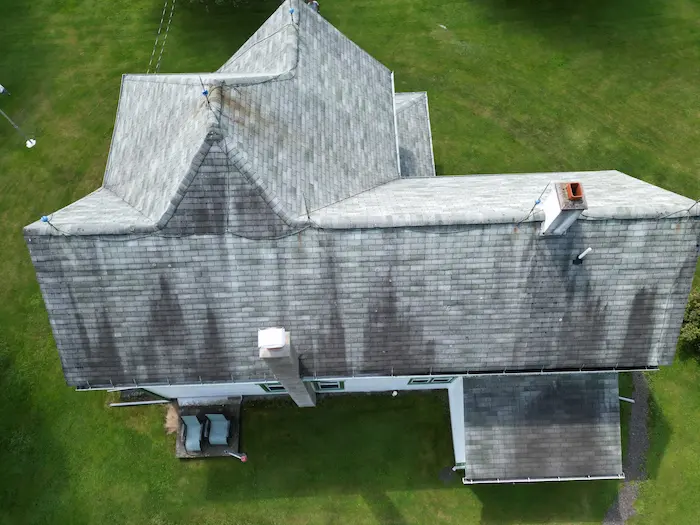
Learn what causes black streaks on asphalt shingles, how they should be cleaned safely, and how algae-resistant shingles can help.
How Clogged Gutters Can Cause Hidden Water Damage
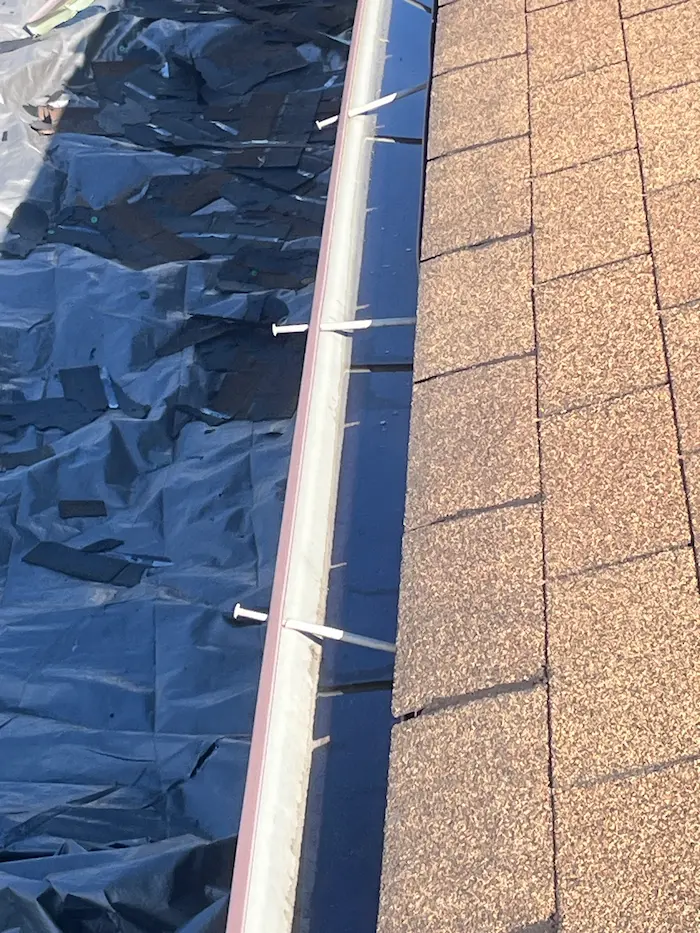
See how poor gutter drainage can affect fascia, soffits, siding, landscaping, and the area around your home's foundation.
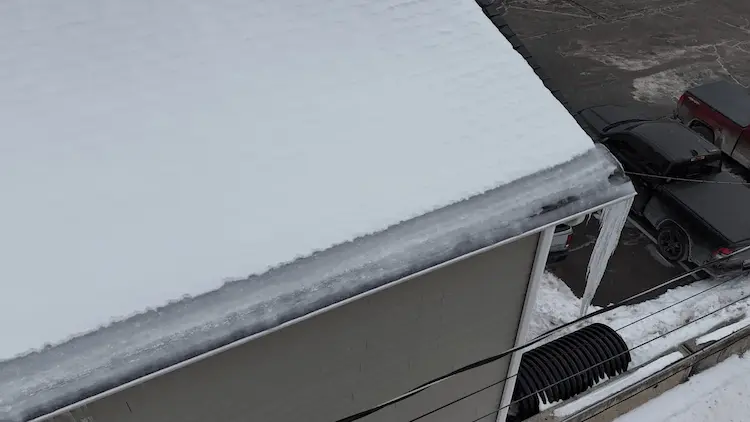
How to Prevent Ice Dams on Your Roof in Northeast Pennsylvania
Learn why ice dams form, how insulation and ventilation affect them, and what homeowners should do when ice builds along the roof edge.
Ready to Talk About Your Roof?
Contact Zenobi Roofing Inc. for roof replacement, roof repair, storm damage inspections, and gutter services throughout Archbald, Scranton, Clarks Summit, the Mid Valley, and surrounding NEPA communities.