Is Metal Roofing Worth the Higher Upfront Cost in Lackawanna County?
Roofing Materials
Is Metal Roofing Worth the Higher Upfront Cost in Lackawanna County?
Metal roofing can offer a long service life and a distinctive appearance, but the higher initial investment does not automatically make it the best roofing choice for every home. The real comparison depends on the type of metal system, the asphalt shingle system being considered, the roof design, installation quality, and how long the homeowner expects to own the house.
Is metal roofing worth it? It can be for homeowners who value a long-lasting roof system and plan to remain in the home long enough to benefit from the additional investment. Asphalt architectural shingles remain a practical option when lower upfront cost, familiar repair methods, and broad color selection are higher priorities.
In This Article
The Comparison
Metal Roofing vs. Asphalt Shingles
Comparing a metal roof with asphalt shingles sounds simple until you look more closely at the products being compared.
Metal roofing includes several different panel profiles, metals, coatings, seams, and attachment systems. Asphalt shingles also range from basic products to architectural shingles installed as part of a complete roofing system.
For that reason, a useful comparison is not simply "metal versus shingles." It is a properly designed metal roofing system compared with a properly installed asphalt shingle roofing system.
The material visible from the street is important, but the roof underneath it and the details around it often determine how well the finished system performs.
Metal Roof Types
Not All Metal Roofs Are the Same
One of the biggest mistakes in roofing comparisons is treating every metal panel as though it were the same product.
A concealed-fastener standing-seam roof and an exposed-fastener panel system have important design differences.
Standing-Seam Metal Roofing
Standing-seam systems commonly use clips or concealed fastening methods beneath raised panel seams.
Properly designed clip systems allow the panels to accommodate normal expansion and contraction as metal temperatures change while keeping the primary fasteners out of the exposed weathering surface.
Exposed-Fastener Metal Panels
Exposed-fastener systems use fasteners that pass through the visible panel surface.
Those systems can be appropriate for many applications, but the exposed fasteners and their sealing components become part of the roof's weather-resistant detailing.
Asking only whether a roof is "metal" leaves out some of the most important information about how that roof is actually designed.
Service Life
How Long Can a Metal Roof Last?
Metal roofing is often chosen because certain systems can provide a long service life.
However, there is no single lifespan that applies to every metal roof.
Metal type, coating, panel profile, attachment method, roof slope, environment, flashing, workmanship, maintenance, and other conditions all affect long-term performance.
A Metal Construction Association research study found that an unpainted 55% aluminum-zinc coated steel standing-seam roof constructed using best practices could be expected to provide a service life exceeding 60 years under the conditions studied.
The research applies to a particular coated steel standing-seam roof system and installation conditions. An exposed-fastener panel, different coating, different metal, poorly detailed roof, or improper installation should not automatically be given the same expectation.
This is a good example of why the roof system matters more than a broad material label.
Project Cost
Why Does Metal Roofing Cost More Upfront?
Residential metal roofing typically requires a larger initial investment than an architectural asphalt shingle roof.
Part of that difference comes from the roofing material itself. Labor, fabrication, trim, panel layout, flashing details, equipment, and the type of metal system also affect the completed project.
Complex rooflines can make that difference even more noticeable.
Dormers, valleys, chimneys, sidewalls, roof transitions, plumbing vents, skylights, and other interruptions require careful detailing regardless of the material used.
A higher-priced material does not make poor installation less important. Expensive roofing still depends on correct details.
This is why homeowners comparing bids should look beyond the price per square foot and understand what roofing system is actually being installed.
NEPA Winter
How Does Metal Roofing Handle Snow and Ice?
Snow behavior is an important consideration for a metal roof in Northeast Pennsylvania.
Smooth metal roof surfaces can allow accumulated snow and ice to move from the roof as conditions change. Whether that is helpful or creates a hazard depends on the roof and what is located below it.
Entryways, sidewalks, driveways, decks, landscaping, gutters, and lower roof sections all need to be considered when designing how snow will be managed.
In areas where sudden snow release could create a hazard, a properly designed snow-retention system may be appropriate.
Randomly fastening a snow guard through a standing-seam panel can interfere with the way the roof manages water and thermal movement. The attachment method should be compatible with the specific panel and seam.
Metal Roofing Does Not Eliminate Ice Dams
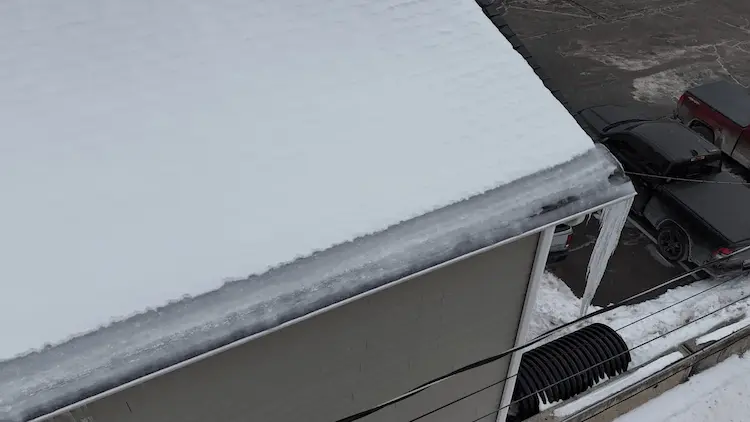
Changing the outer roof covering does not eliminate the underlying conditions that can contribute to ice damming.
Heat loss, insulation, air sealing, ventilation, snow accumulation, roof geometry, and changing temperatures can still matter.
Our guide to preventing ice dams on roofs in Northeast Pennsylvania explains those conditions in more detail.
Inside the Home
Are Metal Roofs Noisy When It Rains?
The answer depends heavily on the roof assembly.
A metal panel installed on an open structure can sound very different from a residential metal roof installed over solid decking with underlayment, insulation, ceilings, and an attic between the roof and living space.
Because construction varies from house to house, it is better not to promise that every metal roof will be silent or assume that every metal roof will sound like rain hitting a barn.
When homeowners ask about noise, the complete roof and ceiling assembly matters more than the word "metal" by itself.
Energy Performance
Does a Metal Roof Automatically Make a Home More Energy Efficient?
No. Metal roofing should not automatically be advertised as an energy-saving roof simply because it is metal.
Cool-roof performance depends in part on how much solar energy the roof reflects and how effectively the roof releases absorbed heat.
The coating and color of a particular product therefore matter.
Insulation, attic air sealing, ventilation, roof assembly, house design, and local conditions also influence how the building performs.
A reflective metal roofing product may be useful as part of an energy-conscious design, but homeowners should compare the actual performance properties of the products being considered rather than assuming all metal roofing performs the same way.
Long-Term Ownership
Metal Roofing Still Requires Inspection and Maintenance
Long service life does not mean a roof should be forgotten after installation.
Flashing, sealants where applicable, penetrations, snow-retention attachments, gutters, trim, fasteners on systems where they are exposed, and any later modifications to the roof can all deserve attention over time.
Later Roof Penetrations Matter
Adding equipment to a standing-seam roof requires particular care.
Solar equipment, plumbing changes, satellite equipment, snow retention, or other attachments should not be installed in a way that unnecessarily penetrates the weathering surface or prevents the panels from moving as designed.
Correct repair and attachment methods depend on the exact roof system.
Roof Details
Roof Shape and Flashing Can Matter More Than Material Choice
Simple roofs are generally easier to detail than roofs filled with transitions.
A house with dormers, intersecting roof sections, chimneys, skylights, valleys, sidewalls, and multiple additions creates more places where water must be carefully directed.
Those details matter on both metal roofs and asphalt shingle roofs.
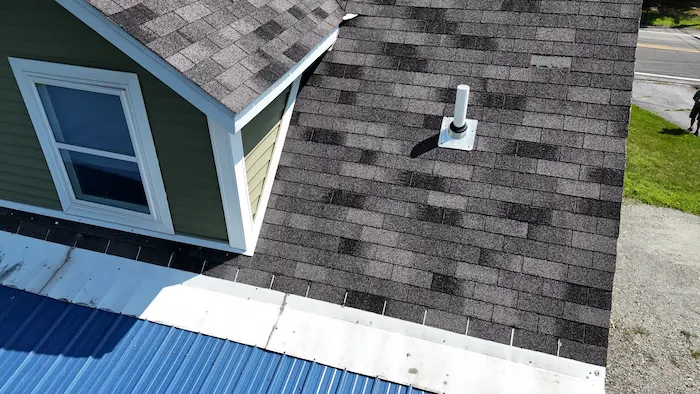
The photograph in this article is a good example of another situation: different roofing materials meeting on the same roof.
A transition between metal panels and asphalt shingles requires a planned detail that accounts for how water moves from one roof surface to the next.
When two roofing materials meet, the transition should work as part of the roof design—not depend on a large amount of exposed sealant to keep water out.
Our upcoming guide to roof flashing around chimneys, skylights, and transitions will cover why these details are so important.
Asphalt Shingles
Why Asphalt Shingles Still Make Sense for Many Homes
Choosing asphalt shingles instead of metal does not mean choosing an incomplete roofing system.
A proper asphalt shingle replacement starts below the shingles themselves.
The existing roof can be removed, the wood decking inspected, damaged sections corrected as needed, underlayment and ice protection installed, flashing addressed, ventilation evaluated, and the new shingle system installed over a prepared surface.
Architectural shingles also give homeowners a wide range of colors and blends without requiring the initial investment associated with many residential metal systems.
If appearance is an important part of the decision, our upcoming guide to choosing the best shingle color for a Northeast Pennsylvania home will look at how roof colors work with siding, trim, stone, and brick.
You can also learn how the complete asphalt roofing system is approached on our roof replacement page .
Making the Decision
Is Metal Roofing Worth It for Your Home?
There is no single answer that applies to every homeowner in Lackawanna County.
Metal roofing becomes more attractive when the homeowner values a long-lasting system, likes the appearance, plans to remain in the home for a long time, and is comfortable with the additional upfront investment.
Asphalt shingles can make more sense when initial cost carries more weight, a traditional appearance is preferred, or the homeowner does not expect to remain in the property long enough to place as much value on the potential long service life of a premium metal system.
A well-designed roofing system that fits the house and is installed correctly is more important than choosing a material simply because it is marketed as the premium option.
Warranties
Compare the Written Warranty, Not Just the Number of Years
Both metal roofing and asphalt shingle products can come with manufacturer warranties, but the terms vary significantly by product and system.
A long warranty period does not automatically mean every type of failure, labor expense, flashing detail, or installation issue is covered for that entire period.
Homeowners should understand who provides the warranty, what components are covered, whether coverage changes over time, what installation requirements apply, and how workmanship coverage differs from manufacturer coverage.
We will break those differences down in our guide to workmanship warranties vs. manufacturer roof warranties .
FAQs
Questions About Metal Roofing and Asphalt Shingles
Is metal roofing worth the extra cost?
It can be, particularly for a homeowner who plans to stay in the house for a long time and values the potential service life of a properly designed standing-seam system. The higher upfront cost does not automatically make metal the better financial choice for every home.
Does every metal roof last 50 or 60 years?
No. Metal roof longevity depends on the metal, coating, panel system, environment, roof design, installation quality, flashing, and maintenance. Long-term studies of particular standing-seam systems should not be used as a guaranteed lifespan for every metal roofing product.
Is standing-seam metal better than exposed-fastener metal?
They are different roof systems. Standing-seam systems can conceal fasteners from the weathering surface and use attachment methods designed to accommodate thermal movement. Exposed-fastener panels use fasteners through the panel surface. The appropriate system depends on the application, design, budget, and installation requirements.
Do metal roofs shed snow?
Smooth metal roof surfaces can allow accumulated snow and ice to move as conditions change. On roofs where sudden release could affect entrances, walkways, vehicles, lower roofs, or other areas, properly designed snow retention may be appropriate.
Will a metal roof prevent ice dams?
No. The outer roofing material does not eliminate heat loss, insulation, ventilation, snow accumulation, and roof-temperature differences that can contribute to ice dam formation.
Are metal roofs noisy during rain?
Noise depends on the entire roof assembly. A residential metal roof over solid decking, underlayment, insulation, an attic, and finished ceilings behaves differently from metal panels installed over an open building.
Is metal roofing more energy efficient than shingles?
Not automatically. Roof energy performance depends on properties such as solar reflectance and thermal emittance as well as the roof color, coating, insulation, attic design, ventilation, and overall building assembly.
Can a house have both metal roofing and asphalt shingles?
Yes. Some homes use different roofing materials on separate roof sections. Where the materials meet, the transition needs to be properly designed and flashed so water moves correctly between the different roof surfaces.
Related Roofing Resources
Learn More Before Choosing a Roofing System
Material choice is only one part of a roof replacement. Decking, flashing, water protection, ventilation, snow conditions, installation details, and warranties all affect the finished system.
Recent Articles
Roofing Advice & Guides
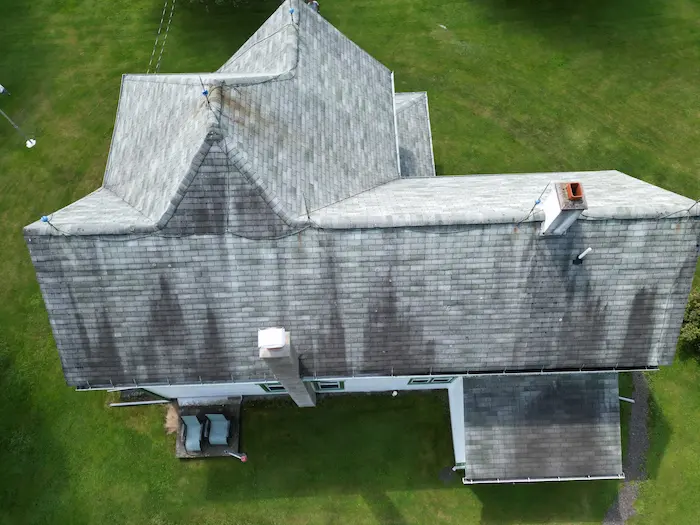
Black Streaks on Roof Shingles: What Causes Them?
Learn what causes black streaks on asphalt shingles, how they should be cleaned safely, and how algae-resistant shingles can help.
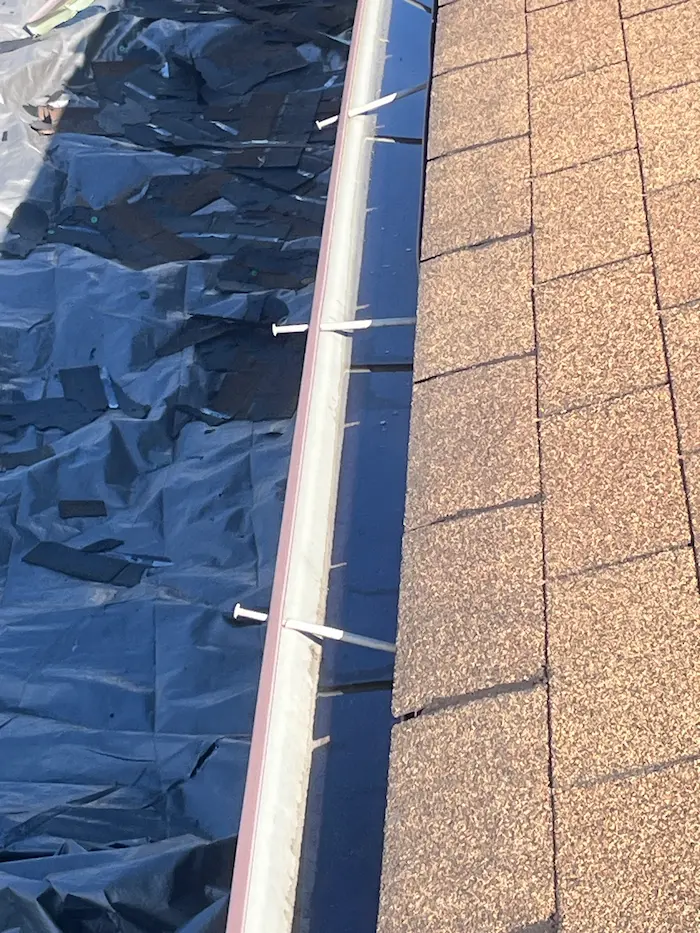
How Clogged Gutters Can Cause Hidden Water Damage
See how poor gutter drainage can affect fascia, soffits, siding, landscaping, and the area around your home's foundation.
How to Prevent Ice Dams on Your Roof in Northeast Pennsylvania
Learn why ice dams form, how insulation and ventilation affect them, and what homeowners should do when ice builds along the roof edge.
Ready to Talk About Your Roof?
Contact Zenobi Roofing Inc. for roof replacement, roof repair, storm damage inspections, and gutter services throughout Archbald, Scranton, Clarks Summit, the Mid Valley, and surrounding NEPA communities.