Roof Maintenance
Roof Moss on Asphalt Shingles: How to Remove It Safely in Northeast PA
Roof moss often starts on shaded, damp sections of asphalt shingles and can gradually spread across the surface. Unlike ordinary discoloration, moss creates raised plant growth that can hold moisture and collect debris. Because of this, homeowners should address moss without damaging the shingles underneath it.
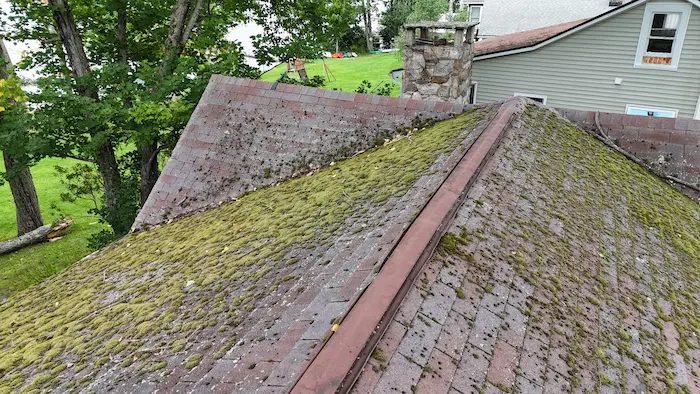
Homeowners should address moss on asphalt shingles, but they should avoid pressure washing or aggressive scraping. Moss can hold moisture, collect debris, and grow around shingle edges. Therefore, the safest cleaning approach depends on the roofing product and the amount of growth. Follow the shingle manufacturer's current cleaning recommendations and avoid abrasive methods that may damage the surface.
In This Article
Understanding the Growth
What Is Roof Moss?
Moss is a small plant that grows where moisture remains available and conditions allow it to become established.
On a house, that often means a shaded roof slope, an area beneath mature trees, a valley where debris collects, or another section that takes longer to dry after rain or morning dew.
In most cases, moss appears as raised green, yellow-green, or brown growth rather than a flat stain across the shingle surface.
Moss Is Different From Black Roof Algae
Homeowners sometimes use the terms moss, algae, mold, and mildew for almost any roof discoloration. However, these conditions are not all the same.
If your roof has dark streaking rather than raised plant growth, see our guide to black streaks on roof shingles .
Growing Conditions
Why Does Moss Grow on Some Roofs but Not Others?
Moss needs moisture to survive. As a result, roof sections that remain damp longer often provide better growing conditions.
Shade
Trees, neighboring buildings, dormers, roof direction, and the shape of the house can all affect how much sunlight reaches a particular roof slope.
For example, a heavily shaded section may stay damp longer than a roof surface exposed to direct sunlight.
Leaves and Organic Debris
Leaves, pine needles, small branches, seed pods, and other debris often collect in valleys, behind chimneys, and along roof edges.
In turn, that material can hold moisture against the roofing surface and create better conditions for organic growth.
Roof Drainage
Gutters do not directly cause roof moss. Still, debris buildup and poor drainage can keep roof-edge areas wetter and allow organic material to stay around the roofing system.
Overall, moss growth usually tells us that one part of the roof stays damp or shaded long enough to support it. Understanding why can help reduce the chance of the same condition returning after cleaning.
More Than Appearance
Can Moss Actually Damage Asphalt Shingles?
Yes. Once moss becomes established, it can create more than an appearance problem.
The Asphalt Roofing Manufacturers Association notes that moss can damage shingles, retain debris, and interfere with the roof's intended water-shedding function.
Moss Can Hold Moisture
A normal asphalt roof sheds water and begins drying after the weather clears.
However, thick moss can remain damp after surrounding shingles have started to dry. That prolonged moisture is one reason homeowners should not simply ignore established growth.
Growth Can Reach Shingle Edges
As moss becomes thicker, it can spread around shingle edges and into spaces where debris collects.
This does not mean every roof with moss already leaks. However, heavy growth can interfere with the way the roofing surface normally drains.
Moss Can Hide the Shingle Surface
Dense growth can also make it difficult to evaluate the shingles underneath.
Until the growth loosens, a roofer may have difficulty seeing granule loss, cracking, surface wear, or other deterioration.
For that reason, moss gives homeowners a reason to evaluate the roof. It does not automatically mean the roof needs replacement.
Cleaning Methods
Should You Pressure Wash Moss Off an Asphalt Roof?
No. Asphalt roofing manufacturers and industry guidance warn against using high-pressure washing on asphalt shingles.
Pressure Can Damage the Shingle Surface
Asphalt shingles contain mineral granules embedded in their surface. These granules form an important part of the roofing product and help protect the asphalt underneath.
A strong pressure washer can disturb or remove those granules. In addition, high pressure may damage shingle edges.
Water pressure may also push water into places where the roofing system normally sheds it away.
Therefore, making a roof look cleaner does not help if the cleaning process damages the shingles underneath.
Avoid Abrasive Cleaning
Should Moss Be Scraped or Brushed Off the Shingles?
Homeowners should also avoid aggressive scraping or heavy brushing.
Established moss can attach tightly to the shingle surface. Pulling, scraping, or scrubbing it away may disturb granules or damage roofing material that has already weathered for years.
Dead Moss May Not Disappear Immediately
A properly treated roof may not look completely clean immediately after treatment.
Instead, the moss can loosen gradually after it dies. Weather and appropriate cleaning methods may then remove the remaining growth over time.
Heavy moss can also require additional time or more than one treatment. Because of this, forcing everything off during one visit may do more harm than good.
The goal is to remove the moss while preserving the roof, not to make every shingle look new in one afternoon.
Choosing a Treatment
What Should Be Used to Kill Moss on Asphalt Shingles?
No single cleaning recipe works automatically for every asphalt roof.
Roofing manufacturers can publish different cleaning instructions based on their products and the type of organic growth on the roof.
Follow the Shingle Manufacturer's Instructions
When possible, identify the roofing product and use the manufacturer's current cleaning recommendations.
This approach is safer than choosing a chemical mixture from a general online recipe without knowing whether it matches the roofing product.
What About Bleach?
Various bleach-and-water mixtures appear in roof-cleaning advice online. Some roofing manufacturers and industry documents also allow certain chlorine-based cleaning solutions.
However, the concentration, application method, rinsing procedure, surrounding materials, and manufacturer instructions all matter.
For that reason, we would not give every homeowner one universal mixture and recommend using it on any asphalt roof.
Protect the Areas Around the Roof
A cleaning solution can affect more than the shingles themselves. Landscaping, siding, gutters, painted surfaces, and metal components may also need protection during treatment.
Therefore, the cleaning method should account for both the roof and the materials surrounding it.
Roof Access
Is It Safe to Walk on a Moss-Covered Roof?
Moss can make a roofing surface extremely slippery, especially when the shingles or growth are damp.
In addition, cleaning solutions can make the roof even more slippery during treatment.
Inspect From the Ground When Possible
Homeowners can often identify significant moss growth without climbing onto the house.
For example, binoculars, zoom photography, or a clear view from the ground can help document the condition without unnecessary roof access.
When a roof requires hands-on inspection or treatment, safe access and proper fall protection become especially important.
Ultimately, moss removal is maintenance. It is not worth turning a roofing problem into a fall injury.
Shade and Debris
Can Tree Trimming Help Prevent Roof Moss?
Yes, tree trimming can help when nearby branches create heavy shade or repeatedly drop debris onto the roof.
More sunlight and airflow may help some roof sections dry faster. Additionally, fewer overhanging branches can reduce the amount of leaves and organic material that collect on the shingles.
There Is No Universal Tree-Clearance Number
We would not recommend one exact clearance distance for every property.
Tree species, branch size, tree health, roof design, and property layout all affect what makes sense.
For safety, an appropriate tree professional should handle large branches or difficult pruning rather than someone working from the roof.
Roof Drainage
Do Clean Gutters Help Prevent Roof Moss?
Clean gutters can help the overall roof drainage system work properly.
Leaves and organic debris around roof edges and gutters can hold moisture and slow normal drainage.
Clear Drainage Removes One Contributing Condition
A clean gutter will not eliminate heavy shade or guarantee that moss never grows.
However, clear gutters help move water and debris away from the roof edge instead of allowing them to remain there longer than necessary.
For more information, our guide to clogged gutters and hidden water damage explains why maintaining roof drainage matters beyond moss growth alone.
Prevention Products
What About Zinc or Copper Strips for Roof Moss?
Some roofing systems use zinc or copper products near the upper part of the roof as part of a strategy to discourage organic growth.
When rain moves across the metal, it can carry small amounts of metal ions down the roof surface.
They Are Not an Instant Moss Removal System
Metal strips do not provide an instant cure for heavy existing moss.
Instead, a roofer should first evaluate and address the existing growth.
Installation Still Matters
Adding a component to an asphalt roofing system requires consideration of the shingles, ridge components, flashing, fasteners, ventilation, and manufacturer requirements.
In other words, a moss-prevention product should not create a new roofing problem while trying to solve an old one.
Moss vs. Algae
Will Algae-Resistant Shingles Prevent Moss?
Not necessarily.
Modern algae-resistant shingles use technology designed primarily to reduce the blue-green algae that creates dark streaking on many asphalt roofs.
However, that technology does not guarantee that moss cannot grow on a roof that remains damp, heavily shaded, or covered with organic debris.
As a result, homeowners should distinguish raised moss growth from the black staining commonly associated with algae.
Learn more in our guide to black streaks and algae on asphalt shingles .
Condition Matters
Does Moss Mean the Roof Needs to Be Replaced?
No. Moss growth alone does not tell us whether the entire roofing system has reached the end of its useful life.
A Serviceable Roof Can Still Grow Moss
A shaded roof slope can develop moss while the surrounding shingles remain in otherwise serviceable condition.
In that situation, treating the growth and addressing reasonable contributing conditions may make more sense than replacing the roof.
Sometimes Moss Is Only One of Several Problems
Another roof may have moss along with widespread shingle deterioration, repeated leaks, failing flashing, brittle materials, or damaged decking.
Those additional conditions can change the recommendation. Therefore, the overall roof condition matters much more than the presence of moss alone.
Moss is one part of a roof evaluation. It should not automatically become a roof-replacement recommendation.
If the roof has another localized problem, learn more about our roof repair service .
Older Roofing
What if Moss Is Growing on an Older Roof?
Cleaning an older roof deserves extra consideration because the shingles may already have years of weather exposure.
For example, brittle, heavily worn, or deteriorated shingles may suffer additional damage from aggressive cleaning.
Ask What Condition Exists Under the Moss
Sometimes the better question is not how to make the roof look clean again.
Instead, consider whether the roofing material underneath the growth still has enough useful service life to justify the cleaning effort.
Our guide to roof tune-ups and evaluating an aging roof explains why maintenance decisions should start with actual roof condition rather than age alone.
Our Approach
How We Look at Moss on a Northeast Pennsylvania Roof
When we look at roof moss, we first try to understand why that particular section of the roof supports growth.
For example, a shaded north-facing slope beneath mature trees can tell a different story from moss concentrated around a debris-filled valley or roof edge.
Then We Look at the Roofing Material
We look at the condition of the shingles beneath and around the growth, including visible wear, shingle edges, granule condition, flashing, penetrations, and signs of leaking.
If the rest of the roof remains in good condition, addressing the moss may make sense as a maintenance step.
On the other hand, if the growth covers heavily deteriorated shingles or another roofing problem, cleaning alone will not correct those conditions.
The goal is not simply to turn a green roof back to gray. Instead, the goal is to protect the roofing system underneath it.
Reducing Future Growth
How Can You Help Keep Roof Moss From Coming Back?
No prevention method guarantees that moss will never return, especially on heavily shaded properties.
Still, homeowners can make the roof less favorable for recurring growth.
Focus on Moisture, Debris, and Shade
Overall, prevention focuses on helping the roof stay clear, drain normally, and dry more readily after wet weather.
FAQs
Questions About Roof Moss Removal
Does moss damage asphalt shingles?
It can. Established moss can hold moisture and debris while interfering with the way asphalt shingles shed water. The amount of concern depends on the amount of moss and the condition of the roof underneath it.
Can I pressure wash moss off my roof?
No. High-pressure cleaning can disturb protective granules, damage shingle edges, and push water into areas where the roof normally sheds it away.
Can I brush or scrape moss off asphalt shingles?
Avoid aggressive brushing and scraping because those methods can disturb the granulated surface. Instead, use a treatment method appropriate for the roofing product.
Can I use bleach to remove roof moss?
Some roofing manufacturers and industry guidance allow specific chlorine-based cleaning solutions. However, no single mixture works for every asphalt roof. Follow the current instructions for the specific roofing product.
Why does moss grow mostly on one side of my roof?
That roof slope may receive less sunlight or stay damp longer because of its direction, nearby trees, neighboring buildings, roof geometry, or accumulated debris.
Is roof moss the same as black roof streaks?
No. Black roof streaks commonly come from algae, while moss produces raised plant growth. Therefore, the appearance and cleaning considerations differ.
Does roof moss mean I need a new roof?
No. The shingles, flashing, decking, leak history, amount of growth, and overall roof condition help determine whether cleaning, repair, or replacement makes more sense.
Will algae-resistant shingles stop moss?
Not necessarily. Algae-resistant roofing technology primarily targets algae discoloration. Moss can still grow where moisture, shade, and debris create favorable conditions.
Can moss return after roof cleaning?
Yes. Moss can return if the roof continues to receive heavy shade, stays damp for long periods, or repeatedly collects organic debris. Reducing those conditions can help slow future growth.
Should I walk on the roof to remove moss myself?
Moss and roof-cleaning solutions can make shingles extremely slippery. Therefore, homeowners should avoid unnecessary roof access, especially on steep, damp, damaged, or difficult roof sections.
Ready to Talk About Your Roof?
Contact Zenobi Roofing Inc. for roof replacement, roof repair, storm damage inspections, and gutter services throughout Archbald, Scranton, Clarks Summit, the Mid Valley, and surrounding NEPA communities.