
Storm Damage
Roof Storm Damage: 5 Signs Lackawanna County Homeowners Should Look For
Roof storm damage is not always obvious from the ground. After heavy wind, hail, falling branches, or a strong thunderstorm, a roof may look mostly normal while still having lifted shingles, damaged flashing, loose materials, clogged gutters, or small openings where water can begin working its way into the home.
The safest first step is not climbing onto the roof. Homeowners can look for several warning signs from the ground, from windows, or from inside the attic or living space. If something looks different after a storm, a professional roof inspection can help determine whether the issue is a small repair, storm damage documentation, or a larger roofing concern.
This guide explains five common signs of roof storm damage, what each sign can mean, and what Lackawanna County homeowners should do next.
The Quick Answer
What Are the Most Common Signs of Roof Storm Damage?
The five common signs of roof storm damage are missing or lifted shingles, shingle pieces or granules in the yard or gutters, dented metal components, fallen branches or impact marks, and new water stains or active leaks inside the home.
Not every sign means the roof needs replacement. Some storm-related issues can be repaired, while others may require a more detailed inspection to understand the full condition of the roof.
Use the yard, driveway, windows, attic, and interior ceilings before considering anything near the roof surface.
New stains, loose shingles, debris, granules, or bent metal after a storm can point to fresh damage.
Photos and a written inspection help explain what was found before deciding on repair, replacement, or claim steps.
Table of Contents
- Roof storm damage overview
- What storms damage roofs in NEPA?
- 5 signs of roof storm damage
- 1. Missing, torn, or lifted shingles
- 2. Granules or shingle pieces
- 3. Dented flashing, vents, or gutters
- 4. Fallen branches or impact damage
- 5. Water stains or active leaks
- What to do after finding damage
- What a roof storm damage inspection includes
- Insurance claim help
- Frequently asked questions
Roof Storm Damage Overview
Roof storm damage happens when wind, hail, rain, ice, or falling debris affects the materials that protect the home. Sometimes the damage is obvious, such as missing shingles or a branch through the roof. Other times, the damage is more subtle, such as lifted shingle edges, bruised shingles, worn flashing, or a slow leak that appears days later.
In Northeast Pennsylvania, roofs deal with a mix of weather throughout the year. Strong summer storms can bring wind, heavy rain, and hail. Fall storms can loosen older shingles or expose weak flashing. Winter weather can add snow, ice, and freeze-thaw stress. A roof that was already aging may show damage sooner after one of these events.
The important thing is to compare the roof to how it looked before the storm. Sudden changes are the warning sign. If shingles, metal, gutters, or interior ceilings look different after severe weather, the roof should be reviewed.
What Types of Storms Can Damage Roofs in Northeast Pennsylvania?
Several types of storms can damage roofs in Lackawanna County and surrounding NEPA communities. The damage pattern often depends on the type of weather that moved through the area.
Can lift shingles, break the seal between shingle layers, tear tabs, loosen ridge caps, and expose vulnerable areas.
Can bruise shingles, knock granules loose, dent metal vents or gutters, and shorten the life of older shingles.
Can expose weak flashing, failed pipe boots, clogged gutters, roof-to-wall leaks, and other water-entry points.
Can crack shingles, puncture decking, bend flashing, damage gutters, or create an active leak that needs prompt attention.
5 Signs of Roof Storm Damage Every Homeowner Should Check
The following signs can usually be noticed without walking on the roof. If you see one or more of these after a storm, it is worth scheduling a closer inspection.
Missing, Torn, or Lifted Shingles
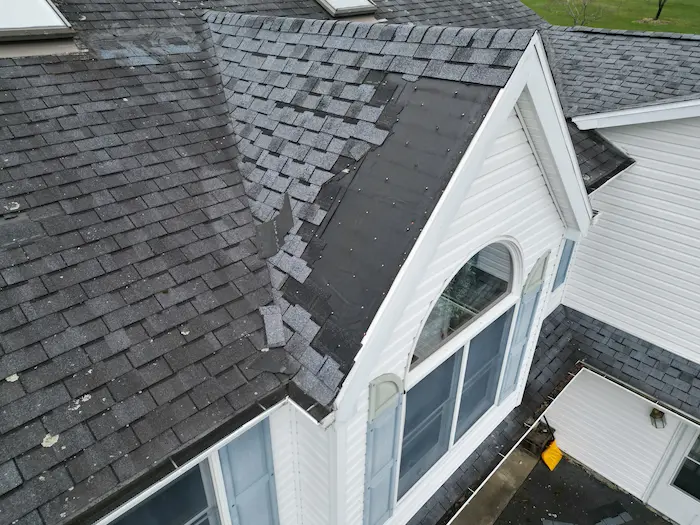
Missing or lifted shingles are one of the clearest signs that wind may have affected the roof. When wind gets under the edge of a shingle, it can break the seal, crease the shingle, tear a section loose, or expose the material underneath.
From the ground, this may look like a dark patch, uneven shingle lines, raised corners, or a section of the roof that looks different from the rest. You may also find shingle pieces in the yard, driveway, landscaping, or near downspouts.
- Dark patches where shingles are missing
- Raised or curled shingle edges
- Loose shingles found around the property
- Damage concentrated on one roof slope
Granules or Shingle Pieces in Gutters and Downspouts
Asphalt shingles have a protective granule surface. Some granule loss is normal as a roof ages, but a sudden amount of loose granules after a storm can mean the shingles were hit by hail, heavy rain, debris, or wind-driven impact.
Granules often look like coarse dark sand. They may collect inside gutters, at the bottom of downspout extensions, near splash blocks, or on walkways below roof edges. A small amount is normal, but a noticeable pile after a storm should be checked.
- Coarse sand-like material near downspouts
- Granule piles after a recent storm
- Shingle pieces in gutters or landscaping
- Spots on shingles that look worn or exposed
Dented Flashing, Vents, Gutters, or Metal Components
Metal parts of the roof and exterior often show storm impact more clearly than the shingles. Hail can dent aluminum gutters, roof vents, metal flashing, chimney caps, and other exposed components.
These dents can help confirm that the property was hit by hail or storm debris. If metal components show fresh dents, the shingle surface should also be inspected because the shingles may have damage that is harder to see from the ground.
- Round dents in gutters or downspouts
- Dented roof vents or metal caps
- Marked flashing near chimneys or walls
- Damage on outdoor metal items nearby
Fallen Branches, Tree Limbs, or Impact Marks
Fallen branches can create anything from minor shingle damage to a serious roof puncture. Even if a branch looks small, it can crack shingles, damage flashing, bend gutters, or create a weak spot where water can enter later.
Large limbs or visible roof punctures should be treated as urgent. Homeowners should not climb on the roof to remove branches or inspect the damage. Storm-damaged surfaces can be unstable, slippery, and unsafe.
- Branches resting on the roof
- Broken shingles below tree limbs
- Punctures or visible roof openings
- Damaged gutters, fascia, or roof edges
Water Stains or Active Leaks Inside the Home
Water stains on ceilings or walls can mean storm damage has allowed water past the roof surface. Sometimes leaks appear during the storm. Other times, stains show up days later as water slowly works through insulation, decking, drywall, or ceiling materials.
Yellow or brown ceiling stains, damp drywall, peeling paint, soft spots, or dripping water should not be ignored. Interior signs usually mean the roof, flashing, pipe boot, valley, or another detail needs to be checked promptly.
- New ceiling stains after a storm
- Active dripping during heavy rain
- Soft drywall or bubbling paint
- Moisture near chimneys, walls, or vents
Safety Reminder
Do not climb onto a storm-damaged roof. Shingles can be slippery, lifted, loose, or weakened after wind, rain, hail, or falling debris. Most warning signs can be checked from the ground, from upper windows, from the attic, or from inside the home.
What Should You Do After Finding Possible Storm Damage?
If you see possible roof storm damage, start by documenting what you can safely see. Take photos of loose shingles, fallen branches, gutter dents, granules, ceiling stains, or water entering the home. Write down the date of the storm and the date you noticed the issue.
The next step depends on the severity. Active leaks, roof punctures, or large tree impacts should be handled quickly to reduce additional interior damage. Less urgent signs, such as missing shingles or granule buildup, should still be reviewed before the problem has time to spread.
Simple Next Steps After a Storm
- Check the roof from the ground, not by climbing on it.
- Look around the yard, driveway, gutters, and downspouts for loose shingles or granules.
- Check ceilings, attic areas, and exterior walls for new water signs.
- Take photos of anything that looks different after the storm.
- Schedule a roof inspection if you see missing shingles, impact damage, leaks, or unusual wear.
- For active leaks, protect the interior and get help as soon as possible.
A clear inspection helps separate minor repair issues from larger storm damage concerns.
What Does a Roof Storm Damage Inspection Include?
A storm damage roof inspection should look at more than one loose shingle. The goal is to understand the roof system as a whole and identify whether the storm caused isolated damage, widespread damage, or exposed an older roofing issue.
A Typical Zenobi Roofing Storm Damage Review
The exact inspection depends on the home, roof access, weather conditions, and visible concerns.
- Visible shingle condition
- Missing, lifted, torn, or creased shingles
- Roof edges, rakes, and eaves
- Valleys and water-flow areas
- Pipe boots and roof penetrations
- Chimney and wall flashing where visible
- Gutters, downspouts, and metal components
- Photos of visible concerns when helpful
- Interior leak signs when present
- Repair or replacement recommendation based on roof condition
Not every inspection results in a roof replacement recommendation. Some issues are isolated and can be repaired. Other roofs may have storm damage combined with age, previous leaks, poor ventilation, or older installation details that make replacement the better long-term option.
Does Zenobi Roofing Help With Storm Damage Insurance Claims?
Zenobi Roofing Inc. can inspect storm-related roof concerns, provide photos when helpful, explain visible damage, and prepare a clear roofing estimate for approved work. We can help homeowners understand what was found and what roofing work may be needed.
We do not promise insurance claim outcomes. Insurance coverage depends on the policy, carrier, adjuster inspection, damage documentation, cause of loss, deductible, and claim decision. Our role is to explain the roof condition clearly and provide roofing information that helps the homeowner move through the process with better understanding.
Important Insurance Note
If you believe storm damage may be part of an insurance claim, contact your insurance carrier for claim instructions. Avoid permanent repairs before the damage has been reviewed unless emergency protection is needed to prevent further damage.
Frequently Asked Questions About Roof Storm Damage
Can I inspect my own roof for storm damage?
You can check for warning signs from the ground, windows, attic, yard, driveway, gutters, and interior ceilings. You should not climb onto the roof after a storm because the surface may be slippery, loose, or damaged.
Does missing one shingle mean I need a new roof?
Not always. One missing shingle may be repairable, depending on the roof age, shingle condition, location of the damage, surrounding materials, and whether there are other signs of storm damage.
What do hail-damaged shingles look like?
Hail damage can appear as bruised areas, missing granules, dark spots, impact marks, or exposed asphalt. It can be difficult to confirm from the ground, which is why dented gutters, vents, or flashing can also be useful clues.
How soon should I schedule an inspection after a storm?
If you see missing shingles, leaks, branch impact, or new ceiling stains, schedule an inspection as soon as possible. Small problems can become larger if water continues entering the roof system.
Should I call my insurance company first or a roofer first?
If there is obvious damage or an active leak, you may need to contact both. A roofing inspection can help identify visible concerns, while your insurance carrier explains claim requirements, coverage questions, and next steps under your policy.
Can storm damage be repaired instead of replaced?
Yes, some storm damage can be repaired. The right answer depends on the age of the roof, how widespread the damage is, whether matching materials are available, and whether the damage is isolated or part of a larger roof condition problem.
What if the leak only happens during heavy rain?
Leaks that only appear during heavy rain still matter. Wind-driven rain can expose flashing issues, pipe boot problems, valley concerns, siding transitions, or weak roof details that may not leak during light rain.
Learn More About Roof Repair and Replacement
Storm damage is only one part of understanding a roof. Age, ventilation, flashing, decking, past repairs, and shingle condition can all affect whether the right next step is repair, replacement, or continued monitoring.
Need a Storm Damage Roof Inspection?
Zenobi Roofing Inc. helps homeowners with roof repair, roof replacement, storm damage inspections, gutter service, and roofing systems throughout Archbald, Scranton, Clarks Summit, Dunmore, the Mid Valley, and surrounding Lackawanna County communities.
If your roof looks different after a storm or you noticed a new leak, we can inspect the roof, explain what we see, and provide a clear written estimate when work is needed.