Roof Replacement
Good, Better, Best Roofing Estimates: Why We Take a Different Approach
Some roofing companies offer good, better, and best estimates that let homeowners choose between several material packages and price levels.
This approach is not automatically wrong. In fact, tiered packages can help a contractor explain different shingle lines, warranty options, and upgrades. They can also help a homeowner find an option that fits a specific budget.
However, Zenobi Roofing takes a different approach. For a standard asphalt shingle roof replacement, we recommend one complete roofing system that provides the protection, installation details, and long-term value we believe the home needs.
Many project expenses stay nearly the same regardless of the material package. The crew still completes the same tear-off. The old roof still creates the same amount of waste. In addition, equipment, insurance, property protection, permits, and normal business expenses do not disappear when a contractor offers a lower-priced package.
Therefore, the largest opportunity to reduce the price often comes from the roofing materials and system components. Those materials are also the part of the project that remains on the home after the crew leaves.
The Quick Answer
Why Does Zenobi Roofing Not Use Good, Better, Best Estimates?
Zenobi Roofing recommends one complete roof system instead of creating a lower-priced package by reducing the materials or installation details that protect the home. We understand why contractors use tiered estimates. However, we believe the roof should remain the strongest part of the homeowner’s investment, not the main place where a contractor reduces the project to reach a lower price.
- Tiered estimates can provide useful choices. They can work well when the contractor explains the differences clearly and every option still includes a complete, properly installed roofing system.
- Many project costs remain similar at every level. Labor, tear-off, disposal, equipment, property protection, insurance, and required permits do not disappear when a homeowner selects a less expensive material package.
- The homeowner keeps the roofing system. Long after the crew, dumpster, permit, and equipment leave the property, the materials and workmanship must continue protecting the home.
What Is a Good, Better, Best Roofing Estimate?
A good, better, best roofing estimate presents several versions of the same project at different price levels. For example, each option may include a different shingle line, underlayment, accessory package, warranty, or combination of roofing components.
The lowest tier usually targets homeowners who want a lower initial price. Meanwhile, the middle tier may include upgraded shingles or additional warranty coverage. The highest tier may include premium materials or the strongest manufacturer warranty that the contractor offers.
When contractors explain the differences honestly, this approach can give homeowners useful choices. A lower tier can still provide a legitimate roofing system when it includes the required components, follows manufacturer instructions, meets applicable requirements, and suits the home.
The package name matters less than the written scope
Contractors often use terms such as good, better, premium, platinum, or lifetime package as marketing labels. Therefore, homeowners should focus on the actual shingles, underlayment, flashing, ventilation, warranties, and installation details inside each option.
Why Do Roofing Contractors Use Tiered Estimates?
Contractors often use tiered estimates because homeowners have different priorities and budgets. One homeowner may care most about the initial price. Another may want a specific designer shingle. In addition, another homeowner may place greater value on enhanced manufacturer warranty coverage.
Several packages can also simplify the decision. Instead of reviewing every component separately, the homeowner chooses between options that the contractor has already organized.
As a result, a tiered estimate can create a straightforward buying process. The important question, however, is whether the lowest-priced option still includes a complete roof system or removes important protection simply to produce a lower starting price.
Why We Recommend One Complete Roofing System
We base each estimate on the roofing system that we believe fits the home. We do not start with a complete package and then remove important components until the project reaches a lower price.
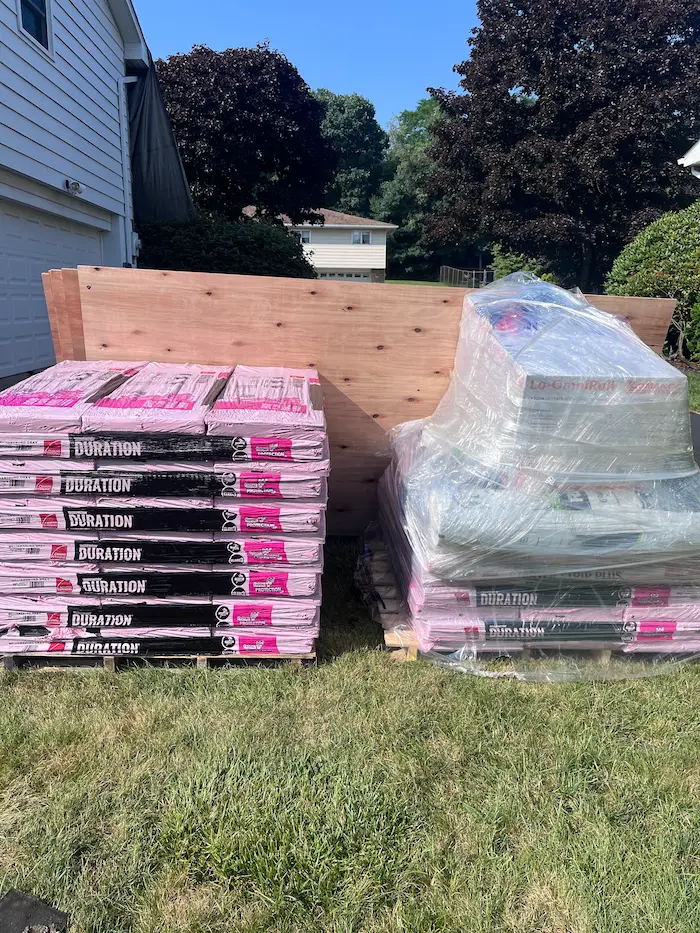
For a standard asphalt shingle roof replacement, our recommendation includes a full tear-off and inspection of the exposed roof deck. We also include the proper underlayment, ice and water protection in specified areas, starter shingles, field shingles, flashing details, ventilation review, matching ridge caps, waste removal, and final cleanup.
Of course, every home has different conditions. One roof may need additional flashing work, while another may need ventilation corrections or damaged decking replacement. Those conditions change the project scope. However, they do not change our basic standard for building the roof system.
Our position is not that every contractor must estimate the same way. Instead, we would rather recommend one roofing system that we feel comfortable standing behind than create a lower tier by reducing the part of the project that protects the home.
Which Roof Replacement Costs Stay Similar Between Packages?
Every contractor has a different cost structure. Still, when the roof size and basic project scope remain the same, many major expenses do not change significantly because the homeowner selects a different material package.
The crew does not normally work for less because the homeowner chooses a lower-priced shingle. The crew must still protect the property, remove the old roof, prepare the deck, install the new system, and complete the cleanup.
The contractor still needs similar time, labor, and equipment to remove the existing shingles and underlayment, regardless of which new shingle package the homeowner selects.
A lower-priced replacement material does not reduce the weight or volume of the old roof. Therefore, the project still requires disposal containers, hauling, and landfill fees.
When a municipality requires a permit or inspection, the fee generally depends on the project rather than the shingle package that the homeowner selects.
Every project still needs ground protection, tarps, careful equipment placement, landscaping protection, debris control, and cleanup.
A dependable roofing company still pays for insurance, vehicles, equipment, fuel, payroll expenses, office costs, and warranty obligations. In addition, the company still needs enough margin to remain available if a homeowner needs help later.
Premium shingles and enhanced warranty programs can add costs. For example, some programs require additional components, registration fees, or specific installation steps. Even so, lowering the material package does not lower every project expense at the same rate.
What Usually Changes Between Roofing Estimate Tiers?
The differences vary by contractor. In some proposals, the contractor may only change the shingle line or manufacturer warranty. In others, the contractor may substitute, reuse, reduce, or remove several roofing components.
| Estimate Detail | Possible Difference | Why It Matters |
|---|---|---|
| Field shingles | Basic, architectural, impact-resistant, or designer shingle lines | Construction, wind performance, appearance, and warranty terms may differ. |
| Underlayment | Different synthetic products or traditional felt | Underlayment creates a secondary protective layer beneath the shingles. |
| Ice and water protection | Different products, quantities, or coverage areas | This material helps protect vulnerable areas where water or ice may back up. |
| Starter and ridge caps | Manufacturer components or shingles modified on site | Purpose-made accessories help complete the roof system and may affect warranty eligibility. |
| Flashing | Replacement, reuse, or limited repairs | Walls, chimneys, valleys, and roof penetrations commonly develop leaks when flashing fails. |
| Ventilation | Complete review and correction or reuse of the existing setup | Balanced intake and exhaust ventilation help the attic manage heat and moisture. |
| Manufacturer warranty | Standard coverage or an upgraded registered system warranty | Coverage terms, labor provisions, duration, and transferability may vary. |
Optional Upgrades Versus Core Roof Protection
Some differences between packages represent true upgrades rather than basic requirements. For example, a designer shingle color, impact-resistant product, or enhanced manufacturer warranty may add value without changing the basic installation standard.
By contrast, flashing work, underlayment coverage, ice and water protection, and ventilation directly affect how the roofing system manages water, wind, heat, and moisture. Therefore, homeowners should understand whether a lower tier removes an optional upgrade or reduces a core part of the roof system.
This distinction matters because two packages can use different shingles while still providing complete protection. However, two other packages may use the same shingles but include very different flashing, ventilation, or underlayment details.
The Roofing System Is the Part the Homeowner Keeps
During installation, the homeowner pays for labor, equipment, delivery, waste removal, insurance, permits when required, and the operation of the company completing the work. Those services make the project possible, but they end when the job ends.
The roofing system remains. The shingles, underlayment, ice and water protection, flashing, ventilation, starter, ridge caps, decking repairs, and workmanship must continue protecting the home through rain, snow, wind, ice, heat, and seasonal temperature changes.
For many homeowners, the house represents the most valuable asset they own. Therefore, we do not believe the protection left on that asset should automatically become the main place to reduce the project price.
Price Still Matters
We understand that every household has a budget. Recommending one complete roofing system does not mean that we ignore price or expect every homeowner to choose the most expensive product available.
Instead, we try to balance material quality, proven installation details, warranty coverage, and long-term value before we present the estimate.
In addition, financing may help some homeowners move forward without removing important parts of the recommended roof system.
How Zenobi Roofing Approaches Roof Replacement Estimates
We inspect every roof individually because each home has different conditions. Roof size, pitch, access, existing layers, flashing, ventilation, decking, valleys, chimneys, walls, and other details can all affect the work.
What Changes From One Home to Another?
A straightforward home in Throop may need less flashing or property protection than a steep home with several roof sections and wall transitions. Likewise, an older roof may require additional decking work, while a newer roof may have solid decking but poor ventilation.
Because these conditions vary, we base the recommendation on the actual roof rather than a one-size-fits-all package. We then explain what we will remove, what we will install, how we will handle hidden decking damage, and which warranties the project includes.
This approach does not mean every homeowner receives the same estimate. Instead, it means we do not create an artificially low option by removing core components from the roofing system that we recommend for that home.
One recommended system does not mean one size fits all
A simple ranch, a steep two-story home, and an older roof with several walls, valleys, chimneys, or ventilation concerns will not have the same project scope or price. Therefore, the estimate still needs to reflect the home’s specific conditions.
How Should Homeowners Compare Roofing Estimates?
Homeowners should compare the written scope instead of focusing only on the final price or the names assigned to each package.
A lower estimate may offer excellent value, or it may include less work. Likewise, a higher estimate may include important additional details, or it may simply carry a higher price. Therefore, the written scope provides the best way to understand the difference.
Details Worth Comparing
Check whether each proposal clearly explains these parts of the project.
- Tear-Off
- Will the contractor remove all existing shingles and underlayment, or install the new roof over the old roofing?
- Roof Deck
- Will the contractor inspect the exposed deck and explain the procedure and pricing for damaged wood?
- Materials
- Does the estimate identify the shingle line, underlayment, ice and water protection, starter shingles, and ridge caps?
- Flashing
- Does the estimate explain how the contractor will handle walls, chimneys, pipe boots, valleys, and other transitions?
- Ventilation
- Will the contractor review both intake and exhaust ventilation rather than replacing only one component?
- Cleanup
- Does the scope include debris removal, magnetic nail cleanup, gutter cleaning, and a final property inspection?
- Warranties
- What workmanship and manufacturer coverage does the contractor include, and what requirements apply to enhanced coverage?
- Contractor
- Does the company carry proper insurance and hold the required Pennsylvania home-improvement registration?
By comparing these details, homeowners can determine whether they are reviewing several prices for the same roof or several substantially different roofing systems.
Good, Better, Best Roofing Estimate FAQs
Are good, better, best roofing estimates bad?
No. A tiered estimate can explain different shingle lines, warranty options, and upgrades clearly. However, homeowners should confirm that every option still includes a complete roofing system.
Why does Zenobi Roofing provide one recommended roof system?
We recommend the roofing system that we believe fits the home. Therefore, we do not create a lower tier by removing important materials or installation details. We still inspect and price every roof individually.
What usually makes one roofing package cheaper?
A contractor may change the shingle line, underlayment, accessory components, flashing scope, ventilation work, or warranty coverage. However, labor, tear-off, disposal, property protection, permits, insurance, and operating costs may remain similar.
Does one recommended system mean using the most expensive materials?
No. The goal is not to select the highest-priced product available. Instead, the goal is to recommend a complete roofing system that balances performance, installation requirements, warranty coverage, and long-term value.
Can a roof estimate still include optional upgrades?
Yes. Optional upgrades may include designer shingles, impact-resistant products, enhanced manufacturer warranties, skylights, gutters, or other work outside the standard roofing scope. A contractor can present those choices separately without reducing the core roof system.
How can I tell whether two roofing estimates include the same work?
Compare the tear-off, decking procedure, shingle line, underlayment, ice and water protection, starter shingles, ridge caps, flashing, ventilation, cleanup, warranties, and contractor qualifications. Similar prices do not always represent the same scope.
Is the lowest roofing estimate always the worst option?
No. A contractor may offer a lower price because of efficient operations, supplier pricing, or a different business model. Therefore, homeowners should compare the written scope and contractor qualifications instead of assuming the lowest or highest price always provides the best value.
Comparing Roof Replacement Estimates?
Zenobi Roofing Inc. provides clear roof replacement estimates based on the condition of the home and the complete roofing system we recommend. We explain the materials, scope of work, decking procedure, flashing, ventilation, cleanup, and warranty details so homeowners understand what they are paying for.