
Roof Replacement
Why Full Tear-Off Roof Replacement Matters
A full tear-off roof replacement means removing the existing shingles and roofing materials before the new roof system is installed.
That extra step matters because the most important part of the roof is not always visible from the ground. The wood deck beneath the shingles needs to be solid, dry, and capable of holding roofing nails properly. Old leaks, soft decking, weak roof edges, and worn flashing may remain hidden until the existing roof is removed.
This guide explains what happens during a full tear-off, what may be uncovered beneath an older roof, and why starting from an inspected roof deck generally provides a better foundation for the new roofing system.
The Quick Answer
Why Is a Full Roof Tear-Off Important?
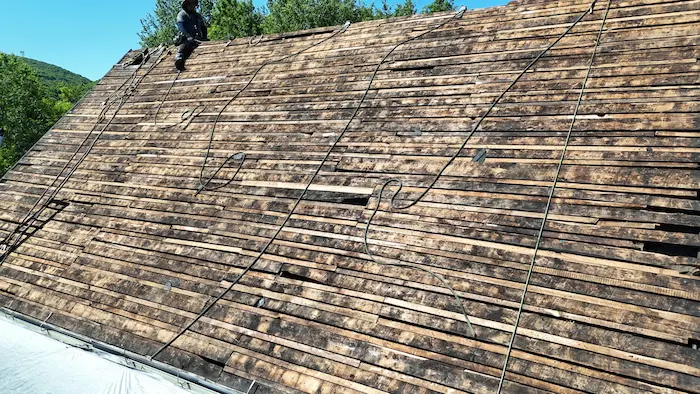
A full tear-off exposes the roof deck before the new roofing system is installed. This allows damaged wood, old leak areas, weak edges, and flashing problems to be found and addressed instead of being covered beneath another layer of shingles.
What Is a Full Tear-Off Roof Replacement?
During a full tear-off, the existing shingles, underlayment, ridge caps, starter materials, loose nails, and other roofing debris are removed. The roof is taken down to the wood decking rather than installing another shingle layer over the existing roof.
Once the deck is exposed, the roofing contractor can see the actual condition of the surface supporting the new roof. Damaged sections can be replaced, older flashing details can be evaluated, and the deck can be prepared before any new underlayment or shingles are installed.
The purpose is not simply to remove old shingles. It is to create access to the areas that determine whether the new roof has a solid foundation.
Why Does the Roof Deck Matter?
The roof deck is the wood surface attached to the rafters or roof framing. It supports the underlayment, shingles, flashing, and other roofing components. It also needs to hold thousands of roofing nails securely throughout the life of the new roof.
A deck can look acceptable from inside an attic while still having soft sections near valleys, chimneys, roof edges, or old leak areas. Other homes may have older plank decking with gaps or deteriorated plywood that cannot be evaluated completely until the roof covering is removed.
New shingles cannot correct damaged wood underneath
Installing high-quality shingles over weak or moisture-damaged decking does not repair the deck. The affected wood should be identified and addressed before it is covered by the new roofing system.
This is also why decking procedures and replacement pricing should be explained in the roof estimate. Some damaged areas cannot be confirmed until tear-off is underway, but the homeowner should understand in advance how those conditions will be handled.
What Can Be Found During Roof Tear-Off?
A roof may appear worn but otherwise normal from the ground. Once the old materials are removed, however, the deck and roof transitions sometimes reveal a different story.
Soft or Rotted Decking
Long-term moisture can weaken plywood, OSB, or plank decking. These areas may feel soft, appear stained, or no longer hold fasteners securely.
Older Leak Paths
Water stains around chimneys, valleys, walls, vents, and roof edges can show where moisture entered the older roof system, even when the homeowner never saw an active interior leak.
Previous Repair Work
Old patches may contain layers of shingles, excessive sealant, reused flashing, exposed nails, or temporary repairs that should not remain beneath the new roof.
Flashing and Ventilation Issues
Tear-off can expose weak wall transitions, deteriorated chimney flashing, blocked intake ventilation, or roof details that need to be corrected as part of the replacement.
Finding one of these conditions does not necessarily mean the entire deck must be replaced. Often, the damaged area is limited and can be repaired before installation continues. The important point is that tear-off makes the condition visible.
Full Tear-Off Compared With Roofing Over Old Shingles
Installing new shingles over an existing roof may reduce some removal and disposal costs at the beginning of the project. However, the original roof deck, underlayment, leak areas, and many flashing details remain covered.
The new shingles also follow the surface of the old shingles rather than lying over a clean deck. This can affect the finished appearance and make a future leak more difficult to trace through multiple roofing layers.
| Roof Detail | Full Tear-Off | Roofing Over Existing Shingles |
|---|---|---|
| Roof deck | Exposed for inspection | Remains mostly covered |
| Old leak areas | Can be located and evaluated | May remain concealed |
| Installation surface | Clean and prepared | Follows the existing shingle surface |
| Older flashing | More accessible for correction | May be reused or remain difficult to access |
| Future leak diagnosis | One roof system to evaluate | Water may travel between multiple layers |
For these reasons, Zenobi Roofing completes asphalt shingle roof replacements as full tear-offs instead of covering an existing shingle roof with another layer.
How Does Tear-Off Affect the New Roof System?
A roof replacement is more than a new visible layer of shingles. Once the existing roof is removed, the new system can be built in the correct order from the exposed deck upward.
Starting From the Deck Up
The deck is inspected first, and damaged wood is replaced where needed. Ice and water protection and synthetic underlayment are then installed over the prepared surface. Starter shingles protect the roof edges, field shingles cover the main slopes, flashing protects roof transitions, and matching ridge caps complete the system.
Ventilation should also be reviewed while the roof is open. Intake and exhaust ventilation work together, so replacing only the ridge vent without considering airflow at the lower roof area may not correct the underlying ventilation problem.
Beginning with a clean deck gives the contractor better access to roof edges, valleys, walls, chimneys, penetrations, and other details that influence how the finished roof manages water.
What Should Homeowners Look for in a Roof Estimate?
A roof estimate should explain the complete scope of work rather than listing only a shingle product and final price. Two contractors may propose the same shingle while including very different underlayment, flashing, ventilation, decking, cleanup, and warranty details.
The estimate should also state whether the existing roofing will be removed. Terms such as “roof replacement” do not always confirm that the proposal includes a full tear-off.
Important Details to Confirm
A clear roof replacement estimate should address these parts of the project:
- Tear-Off
- Whether all existing shingles and underlayment will be removed.
- Roof Deck
- How the deck will be inspected and how damaged wood will be priced.
- Roof System
- The shingle line, underlayment, ice and water protection, starter, ridge caps, and ventilation.
- Flashing
- How walls, chimneys, valleys, pipe boots, and other roof transitions will be handled.
- Cleanup
- Debris removal, magnetic nail cleanup, gutter cleaning, and final property inspection.
- Protection
- Workmanship warranty, manufacturer warranty, insurance, and Pennsylvania registration information.
Clear written details allow homeowners to compare the actual work being proposed rather than comparing prices that may represent different roofing systems.
Full Tear-Off Roof Replacement FAQs
What is a full tear-off roof replacement?
A full tear-off means the existing shingles and related roofing materials are removed before the new roof system is installed. This exposes the roof deck so it can be inspected.
Why does the roof deck need to be inspected?
The roof deck supports the roofing system and must hold roofing fasteners securely. Soft, rotted, or damaged sections should be identified and addressed before new shingles cover the deck.
Is full tear-off better than installing over old shingles?
A full tear-off provides access to the roof deck, old underlayment, flashing, and hidden leak areas. Installing over existing shingles leaves most of those conditions covered.
Does damaged decking always mean the entire deck must be replaced?
No. Decking damage may be limited to one roof edge, valley, chimney area, or previous leak location. The exposed deck should be inspected so only the areas that need replacement are addressed.
What happens if damaged wood is found after tear-off begins?
The affected area should be reviewed with the homeowner and replaced as needed before the new roof system is installed. The estimate should explain the decking procedure and pricing in advance.
Does Zenobi Roofing perform full tear-off roof replacements?
Yes. Zenobi Roofing completes asphalt shingle roof replacements as full tear-offs so the deck can be inspected and damaged wood or concealed roof problems can be addressed before installation.
Planning a Roof Replacement?
A full tear-off allows the roof deck to be inspected, damaged wood to be addressed, and the new roofing system to be installed over a properly prepared surface.
Zenobi Roofing Inc. provides full tear-off roof replacement and roof repair services throughout Lackawanna County and surrounding Northeastern Pennsylvania communities.
Request a Roof Estimate